Ivan Bunin. Loneliness.

autumn_rain_she_leaves

Whenever the weather is humid and cold, I remember lines from Loneliness, a beautiful poem by Ivan Bunin (1870 – 1953).

Bunin was the first Russian writer to win the Nobel Prize for Literature and was noted for the strict artistry with which he carried on the classical Russian traditions in the writing of prose and poetry, his name did not appear often enough in our school textbooks during the Soviet time, because Bunin left Russia for Paris in 1920 and spent the rest of his life in immigration.

Одиночество (Loneliness) is one of his most beautiful poems. Bunin devoted the poem to his friend, an artist from Odessa Pyotr Nilus, but this poem is undoubtedly an autobiographical one. The feeling of loneliness can be noted in most of Bunin’s poems and prose. This state of mind was quite typical for authors like Bunin, whose works happened to be underestimated both at home and abroad.

The poem was written in the summer of 1903, during a stay in Konstantinopol, where he felt lonely being far from his family and friends. Right before the trip, Bunin had gone through a tragical moment in life: he broke up with his wife, Anna Tsakni. The personal drama affected him deeply; life looked gloomy and senseless, Bunin was going through a deep depression. The translation below is a very good one, it repeats original beat and rhythm of Bunin’s masterpiece.

Loneliness

The rain and the wind and the murk
Reign over cold desert of fall,
Here, life’s interrupted till spring;
Till the spring, gardens barren and tall.
I’m alone in my house, it’s dim
At the easel, and drafts through the rims.

The other day, you came to me,
But I feel you are bored with me now.
The somber day’s over, it seemed
You were there for me as my spouse.
Well, so long, I will somehow strive
To survive till the spring with no wife.

The clouds, again, have today
Returned, passing, patch after patch.
Your footprints got smudged by the rain,
And are filling with water by the porch.
As I sink into lonesome despair
From the vanishing late autumn’s glare.

I gasped to call after you fast:
Please come back, you’re a part of me, dear;
To a woman, there is no past
Once love ends, you’re a stranger to her;
I’ll get drunk, I will watch burning logs,
Would be splendid to get me a dog.

(Taken from: http://www.poemhunter.com/poem/loneliness-332/)

%d0%b8%d0%b2%d0%b0%d0%bd-%d0%b0%d0%bb%d0%b5%d0%ba%d1%81%d0%b5%d0%b5%d0%b2%d0%b8%d1%87-%d0%b1%d1%83%d0%bd%d0%b8%d0%bd

This is the Russian version of the poem and a rare recording of Bunin’s voice, where he reads the poem himself:   Bunin reads his poem Loneliness

Одиночество

И ветер, и дождик, и мгла

Над холодной пустыней воды.

Здесь жизнь до весны умерла,

До весны опустели сады.

Я на даче один. Мне темно

За мольбертом, и дует в окно.

Вчера ты была у меня,

Но тебе уж тоскливо со мной.

Под вечер ненастного дня

Ты мне стала казаться женой…

Что ж, прощай! Как-нибудь до весны

Проживу и один – без жены…

Сегодня идут без конца

Те же тучи – гряда за грядой.

Твой след под дождем у крыльца

Расплылся, налился водой.

И мне больно глядеть одному

В предвечернюю серую тьму.

Мне крикнуть хотелось вослед:

«Воротись, я сроднился с тобой!»

Но для женщины прошлого нет:

Разлюбила – и стал ей чужой.

Что ж! Камин затоплю, буду пить…

Хорошо бы собаку купить.

osennyaya

The Best Passages From The Great Gatsby

Just another reminder of the wonderful book which I have read many times and am going to read again soon.

Robert's avatar101 Books

If Fitzgerald’s prose is like butter, then The Great Gatsby is like bathing in a giant vat of delicious, theater popcorn.

I’ve read this novel multiple times, and I’m always struck by how I never grow tired of reading it. Every single passage lives and breathes and just jumps of the page. Fitzgerald wrote with such a purpose.

With my review coming on Monday, I thought I’d share some of my favorite passages and quotes from The Great Gatsby today.

View original post 494 more words

Reading Catch 22… once again

catch22

I have read this book so many times that it seems I can start reading a random sentence and finish it from my memory. This is one of those books which do not need being reviewed. Ii is absolutely enough to simply list a few quotes from it instead of a review and people will know everything about the book, like these, for example:

“mankind is resilient: the atrocities that horrified us a week ago become acceptable tomorrow.”

“It doesn’t make a damned bit of difference who wins the war to someone who’s dead.”

“Just because you’re paranoid doesn’t mean they aren’t after you.”

“Some men are born mediocre, some men achieve mediocrity, and some men have mediocrity thrust upon them.”

“Prostitution gives her an opportunity to meet people. It provides fresh air and wholesome exercise, and it keeps her out of trouble.”

“The enemy is anybody who’s going to get you killed, no matter which side he is on.”

“He knew everything there was to know about literature, except how to enjoy it.”

“Every writer I know has trouble writing.”

“He was a self-made man who owed his lack of success to nobody.”

“What do you do when it rains?”
The captain answered frankly. “I get wet.”

“When people disagreed with him he urged them to be objective.”

Brilliant, aren’t they?

(This last line was mine.) I say, this is a good book to take on a trip with you. It gives you optimism if you are afraid to fly, it keeps you alert if you listen to it while driving, it just keeps you thinking that you are smart, too, as long as you understand the humor. And this in itself is very encouraging, isn’t it?

Nabokov’s Lolita

nabokov
“If a violin string could ache, I would be that string.” These words, better than any others, reflect the emotional content of Nabokov’s book. To me, Lolita is the pinnacle of Nabokov’s writing. The book is a masterpiece, perfect as it is: an incredible, yet harmonious blend of aesthetically beautiful narrative and a full palette of human emotions.

I remember reading the book in Russian when I was a teenager, it left me bewildered then: I could sense the beauty of the language, but I was not ready to grasp the depths of human misery, because understanding comes with experience, and I was too young for the book. Today, when I am a whole life older, Lolita is one of my personal aesthetical treasures, and I think it will remain one till the end of my life.

Very few authors have the courage to portray love in such a variety of colors. Very few can sympathize with their character so deeply that even ugliness appears beautiful in their hands. Nabokov did this job perfectly well.

Nabokov himself used to say: “Read the books that you love with a thrill and a gasp of delight” (“Книги, которые вы любите, нужно читать, вздрагивая и задыхаясь от восторга.”) I can say that this time, re-reading Nabokov’s Lolita, I experienced exactly the same feelings.

Why I wrote a book about luck

clover

I remember having a dream once. In it, I was trying to figure out why I never give enough thinking to the problrem of luck. I was talking to a woman from work, who I hardly knew then, so even in the dream I asked myself in surprise: “Why am I seeing her in the dream? I never even think about her in real life.”

The woman was staring at me in the dream, and when I looked up, she said: “Luck is a spirit that lives in you until you fail to please it one day.”

“Really? What happens then?” I asked.

“It leaves you, so you lose your luck,” she said. And then, seeing that I was not paying attention, she added: “You don’t believe me. Too bad. It means that you lost yours ages ago.”

I woke up with a nasty feeling of having lost something, and that feeling kept coming back to me again and again during that day. Since then, I started thinking about luck. Later, I made Luck the narrator of my first novel.

I never happened to speak to that woman in real life after the dream. She left our team soon after that, and I did not hear about her for years. Just a few days ago, I ran across an old colleague in the street and we stopped for a few minutes to exchange some news and gossips – you know, the usual stuff. The first thing I heard from my colleague was the news that our former co-worker – the one from my dream – has been ill lately, and that she nearly lost her mind after a nasty divorce, resulting from an even nastier affair with another man, which also ended in nothing, but trouble.

I have been wondering: did she fail to please her luck at some point?

Kurt Vonnegut’s Letter to the Future Must Be Taken Seriously Today.

stalker

In 1988, Kurt Vonnegut wrote his famous Letter to the Future and addressed it to Ladies & Gentlemen of A.D. 2088. In it, Vonnegut expressed hope that people of the future would stop “choosing abysmally ignorant optimists for positions of leadership.” But alas! Nearly thirty years after the letter was written, people seem to be exactly the same, yet the situation with climate, pollution, uncontrolled population growth, mass ignorance and aggression has worsened dramatically. It is really time to take action in response to K.Vonnegut’s Letter, because, as funny as it sounds, the future has arrived sooner than anybody could anticipate.

K.Vonnegut’s words sound especially notable today, less than a week before the USA elections – the event which is going to influence the lives of all population of the world.

Kurt Vonnegut suggested a few simple steps to take, but these steps could literally save the world today. The sad thing is that time seems to have accelerated for us: the future has arrived, and if we decide to wait till 2088, there may be no Ladies and Gentlemen to read Vonnegut’s letter than.

Here are a few lines from K.Vonnegut’s letter to the Future:

“The sort of leaders we need now are not those who promise ultimate victory over Nature through perseverance in living as we do right now, but those with the courage and intelligence to present to the world what appears to be Nature’s stern but reasonable surrender terms:

1. Reduce and stabilize your population.

2. Stop poisoning the air, the water, and the topsoil.

3. Stop preparing for war and start dealing with your real problems.

4. Teach your kids, and yourselves, too, while you’re at it, how to inhabit a small planet without helping to kill it.

5. Stop thinking science can fix anything if you give it a trillion dollars.

6. Stop thinking your grandchildren will be OK no matter how wasteful or destructive you may be, since they can go to a nice new planet on a spaceship. That is really mean, and stupid…

7. And so on. Or else.”

Finally… about my book

inga-4She is a dancer, and a model, and an incurable romantic, who wants to have a big and beautiful life. She gets everything she can from living in a small provincial seaside place in Crimea, but she wants more, a lot more, and finally it happens… a guy from New York, allegedly the luckiest guy on Earth, comes to the town…
Here is a dialog from the book:

Beep–beep, beep–beep–

“Boris? Hi.”

“Inga?! It’s two o’clock in the morning!”

“I know. Listen, I need to talk to you, it’s urgent.”

“Is there a fire or someone got killed?”

“No, but it’s something really big.”

“An elephant got stuck in your bedroom door–”

“Boris, stop it! I am serious. Please, listen to me.”

“Argh. All right, what is it?”

“I don’t know yet, but something big is going to happen in the city.”

“W–what? Is this your big news? Inga, I’ll kill you if you get on my way tomorrow.”

“No. Boris, listen. Mucker just had a long talk with me.”

“Again? What did you do? Crashed his car? Burned his uniform? Sold his badge? Eh?”

“Ah, damn you, stop it! I am being serious and … oh, never mind. I won’t tell you anything at all!”

“All right, Dolly, I’m sorry. Come on, tell me. What is it?”

“Don’t call me Dolly. And don’t interrupt me, okay? So. There’s a treasure. A pile of Tershian gold. It was hidden somewhere in the city decades ago by Professor Markov, a former Museum Director. Also, there’s a guy – Alec Markov – his descendant, who lives in America and is about to visit us next week; he seems to know where the treasures are hidden. Mucker wants to spy on the guy, let him dig up the treasures, and then – well, I don’t know what’s then. Mucker just asked me to support that guy everywhere during his visit, up to the moment when he leads us to the treasure.”

“It was a mistake.”

“What was a mistake?”

“To let you support the guy. You’ll screw it up.”

“Bor’ka! Durak! Shut up, you fool! I hate you when you joke like that!”

“OK, Sweetie, what do you want from me?”

“First, I need your professional help, as I really don’t want to screw it up. Second, I also love treasures, so I thought, why don’t we help the guy find it, but do this secretly from my boyfriend and his dad? We might get our share then.”

“Inga, you must be tired of living. This is suicide!”

“Come on. It’s just a–”

“Inga, do you realize the degree of risk you’ll be facing?”

“Come on, the risk is minimal!”

“You – argh. Listen, go to bed, sleep well, and forget what you just said – forever.”

“Boris, but this is a unique chance! We can’t miss it!”

“You must have eaten something bad for dinner. I say, go to bed now and – ”

“Boris! It’s a win–win situation. This lucky guy will do everything by himself. We’ll only turn up in the right place on the right moment. No one will ever suspect us. They’ll make the American guy responsible.”

“Inga, this is crazy. Your idea is insane.”

“But why? Boris, we want to be rich, don’t we?”

“Yes, we do, but not posthumously. Listen, can you do me a favor? Forget about it and let me have some sleep, I only have two hours left before I have to get up. Bye for now.”

“Boris, wait. Damn! Boris!”

Click. Beep – beep – beep –

Best illustrations for Russian tales

I just read that “Vasilisa the Beautiful” was published in a new edition for English speakers to enjoy. I remember this tale since the time when I could not read. We had a beautiful book of Russian fairy tales (in Russian, of course, issued by a Soviet publishing house) in memory of a famous old Russia artist Ivan Bilibin, who had illustrated a set of Russian tales in 19-th century. It was a beautiful edition, printed like a series of separate books, each for its tale, bound into a beautiful carton box, also illustrated by Bilibin. Now, looking at those illustrations brings up very sweet memories. The tales were great, all of them, but I was very impressed by the illustrations. My mind image of old Russia was just like those illustrations. I remember looking through those books numerous times, even when I became a teenager.

Bilibin's illustration

  • Follow Share love. Educate. Inspire. on WordPress.com
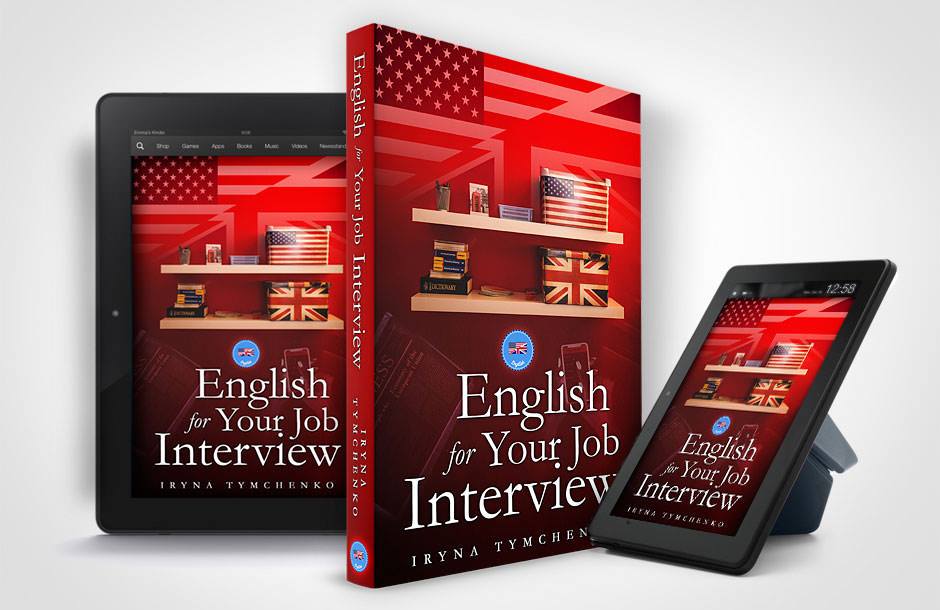
  • New: English for Your Job Interview

  • Follow me on Twitter

  • An Interview

  • Recent: Romantic English Phrasebook

  • Recent: Romantic Russian Phrase Book

  • Languages & Lifestyles

  • Archives

  • Goodreads

  • 101 Books

  • Writing

  • Blogs I Follow

Shelf Love

live mines and duds: the reading life