Writing In the First Person

I just read a nice article by Mia Botha The Pros and Cons of Writing in First Person at Writers Write. Mia feels there is no right or wrong in this question, but there are pros and cons, which depend on the writer.

I agree: full responsibility for deciding how to write the book lies on the writer.

Ernst_writing

On the one hand, it gives you as an author unlimited access to the character’s thoughts and feelings, but it also limits you in describing thoughts and feelings of other characters. Writing in the first person sets out the main character, opposes him/her to everyone else. It is up to the author to decide whether to allow this to happen or not.

In her article Mia notes, and this is a great observation, that writing in first person gives the author a deeper insight into the main characters’ thinking process, but at the same time, it limits the writer in a few other things: “your character can’t be everywhere and he can’t hear everything” and “your character shouldn’t be alone for too long,” and also it is necessary to “be careful of starting every sentence with I.”

I agree with every word of the article, I just want to add a few more. It must be the scientist inside me that is making me write this now, but- well, here is what I think.

As every other element of fiction writing, the choice of the story’s narrator must be reasoned. The one who tells the story shows the reader his/her world in a unique, individual way.

When an author finds a bright individual who can see the world in a very attractive (unusual) manner, plus if there is an event which causes a change in this person’s life, then it makes perfect sense to tell the story in the first person (remember Holden Caulfield from The Catcher In The Rye by J.D. Salinger?). in such case, the whole book aims to show development of one personality; all the world around this person exists to make these changes possible. Every scene takes place in this person’s mind, and the author must see with this character’s eyes as if they were his own. This is a very hard task, unless the author is telling a story from his own life.

If a story has many solutions and it looks like it makes full sense to show how different people (creatures) see the same chain of events, then the author sets a different goal: to show the world in its development, where people are just observers of its dynamics. Their visions are different, their lives move on, but the world remains unchanged. In such stories, the protagonist is still in focus of attention; his vision seems the most important, but the author would rather write in third person, because other characters’ opinions matter, too. The protagonist cannot be opposed to them, because he is on their side, he is one of them, and all of them are struggling against the antagonist’s power (take Neil Gaiman’s The American Gods, for example).

Well, this is the way I see it. The point is, there must be a reason for everything. Once you have decided to write in the first of in the third person, this is dictated by the core idea of your book, by the book’s mission.

A comment on commenting

Just read Amanda Patterson’s tips about commenting on Writers Write. Her list is simple and clear:

  1. Be kind. Be polite.
  2. Leave it alone if you don’t like it.
  3. Don’t preach. 
  4. Leave religion and politics out of it.
  5. Think before you ask.
  6. If you like it, say it.

I agree with them completely. I tought that in fact, most of us never take commenting seriously. I mean, we quickly look through an article, grasp the general idea and move on. Excuse me for this ugly comparison, but it is identical to dogs marking territory. We have no time to think over what we just read because there are so many other articles out there, so we leave a couple of words here and there and never care to slow down.

mark_your_territory

Whenever we write anything, we should keep in mind that our mind droppings may not look nice for everyone. Opinions – especially strong ones – are for personal blogs, while commenting is just like wagging your tail, meaning to say, “Well done, thank you, keep on writing!”

Happy Cartoon Dog Wagging Tail


Being a general in the army of letters

Here is a little note from grammarly.com. There is nothing special in these tips, of course, but still- it drives my attention to my little faithful soldiers – commas, full stops. semicolons, articles. I look down at them like a general looks at his army from the top of a hill. I talk to my “soldiers” while I work, I give them orders: “Stay here!” or “What are you doing here? Move to the end of the sentence!” This is my way of surviving through the boredom of proofreading. What is yours?
Five Mistakes To Avoid in Your NaNoWriMo Novel Infographic

Tug of a new novel

Does it only happen to me or is it a common thing? I have not finished polishing my previous novel yet, but that hum of a new plot is already sitting deep in my head and disturbing me like hell! If I don’t start writing in the nearest time, I am going to blow up. On such days, my mind is a moving kaleidoscope, and I am inside it, small and vulnerable, crawling between my own ideas, risking to be smashed, but unable to run away. Scary? Yeah, a bit. The only way out of that kaleidoscope leads me to my table- sugesting to sit down and trust it all to paper.

At this “kaleidoscope” stage I may write numerous sketches: unconnected brain droppings, images, short scenes, fantasies- with all the disturbance it gains me, I love this stage, because it is very similar to dreaming. At times, it captures me so much that I cannot differentiate between dreaming and reality without making a special effort. Human mind is a mysterious thing, indeed.

A new novel is testing my patience these days. I don’t know how much I can hold it before I run to my table and start writing. Maybe till tonight-

with the eye of an artist

Good writing formula

Litcritics love talking about the role a writer / poet may have in a reader’s life. Talking about it has become a banality, but we’ve got to admit: the role IS big. A good book picked up in the right time can make a teenager quit smoking (unlike parents who always turn up in the wrong time), or provoke a woman to take a new look at her life (and probably run to a hairdresser), or push a shy guy to change his attitude to that bossy boss, or even help an old man stop feeling lonely (really hard task to do).

In this connection, I’ve been thinking about a good writer’s role in a life of another writer. To me, the role is massive, not because we are also readers, as many critics say. No, I dare to argue that.

As soon as you start writing, you never read books with the eyes of a reader anymore. Other writers’ writing bangs into your face every couple of minutes, yelling “This is the way you should have described that storm (that room / that person – whatever)!” Then, as a rule, you grow upset (which is good, because it means you are finally assessing yourself objectively), but you still go on reading and occasionally (only occasionally) you say to yourself, “Well, my scene was not that bad, either-” and then the next stage comes: imitation. Every author goes through this stage. Inevitably. You proceed with your own writing, but the hum from that beautiful book is still very fresh in your mind, and you catch yourself on writing “a bit like that talented guy” It pleases you (because you think you can do it) and irritates you (because it is not totally your writing)- and here the most important moment comes: you either quit writing that stupid story or make a committment to yourself to finish it anyway.

There is just one positive moment in all this process: whether you want this or not, your mind is learning. Yes, this is the nature of the learning process: we analyze what has been done before us and then we go on from there. I daresay, immitation is good. It is just a necessary step towards developing your own writing style. And then, if you are talented, plus inspired, plus patient, plus devilishly hard working (only the four items together, this is a formula!) can bring you to the right result: your own good writing. So, to me a formula of good writing looks like this:

Good Writing = Talent + Inspiration + Hard Work +Patience

Yes, It is as simple as Einstein’s theories. Come on, dear Colleagues, stop reading this stuff! Get back to your work. It is waiting.

bored of writing

Book Previews Service on Amazon.com is great.

Just created and published my first book preview at createspace.com  Not a rocket science, of course, but it gave me that nice feeling of making a little step forward…

Here’s the preview link: https://www.createspace.com/Preview/1180868

Wish my book a lucky journey, please!

Wish me good luck. please!

  • Follow Share love. Educate. Inspire. on WordPress.com
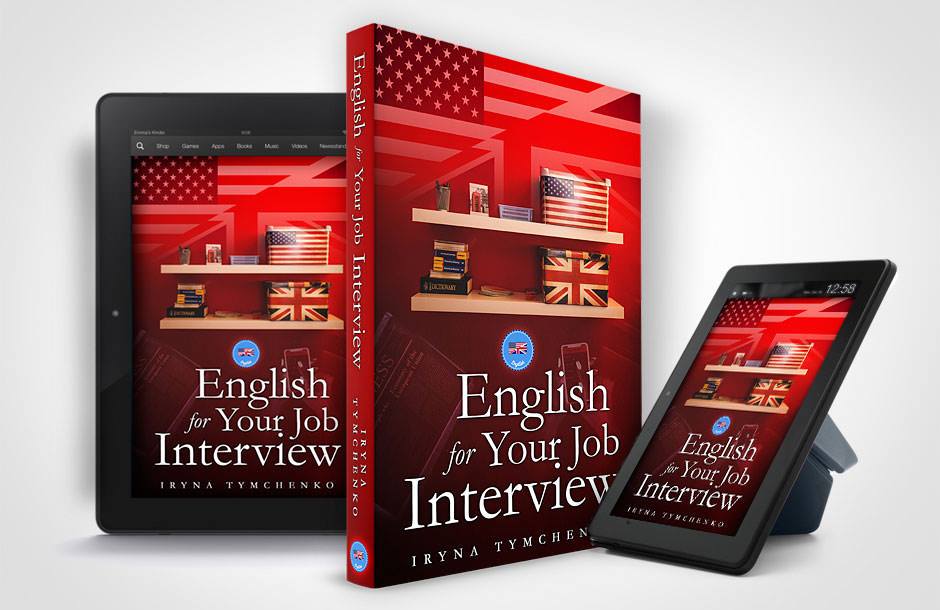
  • New: English for Your Job Interview

  • Follow me on Twitter

  • An Interview

  • Recent: Romantic English Phrasebook

  • Recent: Romantic Russian Phrase Book

  • Languages & Lifestyles

  • Archives

  • Goodreads

  • 101 Books

  • Writing

  • Blogs I Follow

Shelf Love

live mines and duds: the reading life