Fear Is the Root of Our Failures

fear1

An exerpt from WAITING FOR THE DANCE. This is what Luck herself thinks about people’s fears:

“In human society, lack of communication has been known as a common fallacy, it always keeps abreast of the human race. Inability to keep dialog leads millions to misery, sufferings and death, yet even today, millennia after people had learned to speak, they still seem to underrate the simplest anti–conflict remedy of all – conversation. Their reason for being so closed up is ridiculous: fear, trivial fear of looking stupid in the eyes of others, because in human society, the one who speaks the least is considered the wisest. Following common delusion, Boris did exactly what other people traditionally do: he said nothing to Inga about the weird situation during their BMW ride with Alec that morning.

Hmm. Fear again. It looks like it rules over each and every decision in the human world. The fear of losing one’s body or having it hurt determines human behavior; fear hampers the work of brain, narrows horizons, limits the mind’s capacity to only using well–tested, familiar behavioral models. It is a funny paradox; the human brain, which is supposed to be trying to free itself from the prison of its vulnerable body, deliberately hampers its own work by continuously producing fear to ensure the body protection against undesired influences, simply because no brain can live without a body! It looks like the Creator’s idea of a bad joke to me. However, people never have enough confidence to judge the Creator, so they prefer to accept things as they are.”

Annual Best Book Ratings: Objective or Not?

In my opinion, a book should only be rated decades after it was published, when thousands of readers have lived through it and agreed: “this book has changed us”. Today, I would rather rate the books published in the 1990-es, that would be more objective.
Anyway, thanks to Publishers Weekly for the job of putting together and highlighting some information on the most recent publications for us. With all the mass of books being published every year, it is becoming almost impossible to pick out really good books without the help of such ratings.

http://best-books.publishersweekly.com/pw/best-books/2016/top-10#book/book-1 OLYMPUS DIGITAL CAMERA

Blogging Is an Introvert’s Torture

Female student writing at desk

Blogging is a real torture for me as an incurable introvert.

(Here comes a 15-minute break sipping cold coffee and blankly looking at the line above.)

No. Blogging is not my strong side.

(5 more minutes of heavy thinking here.)

It feels like talking to a wall when you have to share your thoughts to a blog instead of chatting with a real audience. Having spent decades working with large and small groups of people every day, I am used to seeing people’s faces and receiving immediate reaction to everything I say. But blogging makes me feel like I have a sleeping patch on my eyes and a helmet over my ears. I must confess: to me, there is nothing cool about sharing my thoughts to invisible audiences. I guess, I am a bit old-fashioned here.

Robert E McGinnis and the Secret of The New Cover — Neil Gaiman’s Journal

I’ve loved Robert McGinnis’s covers for a very long time. I remember the first one I was aware of (it was the cover of Ian Fleming’s James Bond book DIAMONDS ARE FOREVER, when I was about 9. They put the film poster on the book cover, which puzzled me a bit because the plot of…

via Robert E McGinnis and the Secret of The New Cover — Neil Gaiman’s Journal

History of Russian Roulette

Russian roulette (русская рулетка) is a lethal game of chance in which a player places a single round in a revolver, spins the cylinder, places the muzzle against their head, and pulls the trigger. “Russian” refers to the supposed country of origin, and roulette to the element of risk-taking and the spinning of the revolver’s cylinder being reminiscent of spinning a roulette wheel.

RR

It is claimed that this practice was widely known in Russia in the early 19th century. However, there is only one written source before the 20th century: in Mikhail Lermontov’s 1840 “The Fatalist”, one of five novellas comprising his A Hero of Our Time, a minor character survives a version of Russian roulette.

There are a number of legends trying to explain the origin of the game, most of them are based on opinion that the game used to be popular among soldiers and officers of the Russian army. According to one of them, in the 19-th century, Russian roulette was a popular time killer among prison guards in Russian prisons. The legend says that the guards made stakes on life and death of their prisoners and made theguys poor prisoners play the game in front of their eyes.

Another version states that Russian army officers used to voluntarily play this game to surprise others with their bravery.

Russian roulette was also said to be an effective, but relatively safe trick, because on some revolvers, when the trigger is not cocked, the drum rotates freely. Therefore, if the drum is well lubricated, during its rotation the only cartridge will snap down under its own weight and remain in the bottom of the drum, so the chamber of the drum coaxial with the barrel is highly likely to remain empty. However, on many types of revolvers, when the trigger is cocked, the drum does not rotate freely, including the famous “nagan” revolver, which was the main gun of the Russian army at the beginning of the 20-th century: a specially designed spring fixated the drum in firing position even when the trigger was not cocked, so the mass of the cartridge could not have a noticeable effect on the drum position.

russian roulette

The first written mention of the term “Russian Roulette” refers to January 30, 1937. Georges Surdez in the article “Russian Roulette” in the American magazine «Collier’s Weekly» provides a dialogue with a French Foreign Legion sergeant who had served in the Russian army:

«Feldhaym … Have you ever heard of “Russian roulette”?»

When I said that I had not, he told me all about it. When he served in the Russian Army in Romania, approximately in 1917, when everything was falling apart, the Russian officers believed that they were loosing prestige, money, family, country, and honor in the face of the Allies. Frustrated and driven by despair, some of them – right at a table in a restaurant or just surrounded with friends – would suddenly fetch a gun, remove one bullet from the drum (so that there was only one empty slot), twist the drum, put a gun to their head and press the trigger. The probability that the the gun would shoot and that the officer’s brains would splatter everything around was five chances out of six. Sometimes it happened, and sometimes it didn’t.”

This passage describes the most extreme and the most “deadly” version of Russian roulette, when there remains only one empty slot in a drum of a revolver. The 4.2 linear revolver Smith & Wesson, also known as the “Smith & Wesson-Russian” which had been the main gun of the Russian Imperial Army prior to “Nagan”, also had a drum capacity of six cartridges and could also be used for Russian roulette game – even before World War One.

Writing Can Be Taught

Today, I have been reading “Plot and Structure” by J.S.Bell again. In introduction, the author says that he had wasted decades of his time not writing because since childhood he had been told that to be a writer one must be born with it (the gift of writing). He had also been told that writing couldn’t be taught. J.S.Bell writes,”I started to believe it. I figured I didn’t have it and never would. So I did other stuff. Like go to law school. Like join a law firm. Like give up my dream. But the itch to write would not go away. At age thirty-four, I read an interview with a lawyer who’d had a novel published. And what he said hit me in my lengthy briefs. He said he’d had an accident and was almost killed. In the hospital, given a second chance at life, he decided the one thing he wanted was to be a writer. And he would write and write, even if he never got published because that was what he wanted. Well, I wanted it, too.”

Al this sounds sadly familiar to me, and I am sure there are thousands of other people around the world facing the same fact: they never tried writing because they did not believe in themselves, and because everybody around kept convincing them that writing is a wrong way to choose. As well as music, and arts, and any other “impractical” occupations, by the way.

Still, those who are strong enough to overcome their shyness and finally do start writing, as well as those who are quite experienced – all need to learn. My strong belief is that one CAN learn how to write, moreover, it is as complicated as every other intellectual occupation, so it MUST be learned. It is never late to learn and there is never enough of learning. To me, a picture like the one below, is not an evidence of a writer’s failure. It is the evidence of a learning process, which is awesome.

learning_writer

Choosing a Title For Your Book

A few thoughts on choosing a title for your book

As a debut fiction writer, who has spent decades teaching science methodology and writing solely in the genre of science, I have been following writers’ discussions about creative writing lately with unspoiled curiosity of a child. There are dozens of topics in the world of fiction writing which deserve most careful attention, and one of the first among them is giving your book the right name. I find it as important as having a photogenic face for a photo model. The title is the face of your book, it can either help you attract potential readers or scare them away and make them run, mumbling under their nose, “if this is the cover, I’d better not look inside!”

BookTitle

No matter what genre your book belongs to, there are a few universal things which every author should keep in mind (and here the logic of a researcher speaks loudly in me): the title is an inseparable part of the book, which means it must

1) grow out of it (be consistent with it, if you like);

2) reflect the author’s principal message; and

3) identify the genre of the book.

Within a genre, there may be other rules and commonly accepted traditions, but the three above items are the identifying, basic principles for all books. If you call a romance novel “A Midnight Death In A Tunnel”, or call a detective story “My Sweet Emma”, your readers (not to mention the book store assistants and librarians) will be misled.

The title is supposed to set a tone for your book and create a certain expectation in the reader’s mind. A strong title is the book opener, which should entice the reader to look inside.

What is the trick of selecting the right name for the book then? I believe, every writer can help himself with the task by doing the following things.

First, you need to identify the genre of your book, because depending on it, you can set the right tone, or impression, or expectation. It is always a good exercise to put it down and take a good look at it. As an example, look a this: a romance novel “Rick, Deer Hunter” Does it look right to you? To me, it doen not. If my book’s message is to offer people more love and tenderness, I would rather leave this name to writers of adventure books.

To get the taste of commonly used names for your genre, look up a dozen of popular books in the same genre as yours. You’ll need to develop a feel for the most typical names in your genre. As soon as you do this, good names will start popping up in your mind right away.

Another good exercise to do is to write a list of keywords which characterize your book. They may be nouns, verbs or agjectives; they may be short phrases. They should not be the most comonly used words or names. The main quality of a keyword is to characterize your principal idea, the mission of your book, the reason why you spent months of your life writing it.

You may also make up lists of words which describe your main characters, or an important location, or a sensation caused by a scene. Take visual words or words that bring up emotions. You may find a single word whish would perfectly fit as a title, or select a phrase (preferably easy to pronounce and remember); after surveying your lists thoroughly, pick out the words which seem to fit your content the best. Compare your resulting list of titles to those of the popular books in your genre. I hope these exercises will help you select a good name for your book.

There are a few more things which I understood about book titles both, as a reader and as an author. First of all, I realized that a good fiction title always has a touch of emotional tension in it. Compare, for example, these titles:

Bill Murray’s Life (quite neurtal and plain: everyone’s got a life), and

Bill Murray’s Return (provides expectation of an unusual story), and

Bill Murray’s Rise and Fall (gives expectation of a fundemental life story, probably with a sad end), and

Bill Murray’s Revenge (creates expectation of an emotional story with elements of detective).

Comparing book titles is a very good exercise, because it reveals for you how powerful the name of a book may be.

At the same time, the title should be short, simple to pronounce and easy to remember. It can contain a one-word description of a story in action, like- The Intervention, A Breakthrough, or Reunion. It may contain a key word and one more descriptive word (name) to clarify the general mood of the book: My Passionate Diaries, or Darkness At Noon, or The Age Of Innocence. The title may also contain a geographical name, but then, for sure, it should create an image (or a sensation) in a reader’s mind, like these names: The Maltese Falcon, Appointment in Samarra, An American Tragedy. Well, of course, there is an endless variety of names to choose, which only makes the choice more difficult. Still, every writer should keep in mind a few basic things

Whenever I need to give a name to a work of writing, I prepare a little checklist of questiond for myself, no matter wht genre my work belongs to. Here is the list:

– Is the title consistent with the contents of my work (or at least with a part of it)?

– Does the title create an expectation of a particular genre in which the work is written?

– Does the title sound (look) clear and simple, is it easy to remember?

– Can this title entice a reader to open the book?

– Is there at least one special word in my title that can attract my particular readers’ audience?

If I answer all five questions right away and am satisfied, this means I have selected a good title.

Writing In the First Person

Iryna Tymchenko's avatarShare love. Educate. Inspire.

I just read a nice article by Mia Botha The Pros and Cons of Writing in First Person at Writers Write. Mia feels there is no right or wrong in this question, but there are pros and cons, which depend on the writer.

I agree: full responsibility for deciding how to write the book lies on the writer.

Ernst_writing

On the one hand, it gives you as an author unlimited access to the character’s thoughts and feelings, but it also limits you in describing thoughts and feelings of other characters. Writing in the first person sets out the main character, opposes him/her to everyone else. It is up to the author to decide whether to allow this to happen or not.

In her article Mia notes, and this is a great observation, that writing in first person gives the author a deeper insight into the main characters’ thinking process, but at the same time, it limits the…

View original post 403 more words

Writing In the First Person

I just read a nice article by Mia Botha The Pros and Cons of Writing in First Person at Writers Write. Mia feels there is no right or wrong in this question, but there are pros and cons, which depend on the writer.

I agree: full responsibility for deciding how to write the book lies on the writer.

Ernst_writing

On the one hand, it gives you as an author unlimited access to the character’s thoughts and feelings, but it also limits you in describing thoughts and feelings of other characters. Writing in the first person sets out the main character, opposes him/her to everyone else. It is up to the author to decide whether to allow this to happen or not.

In her article Mia notes, and this is a great observation, that writing in first person gives the author a deeper insight into the main characters’ thinking process, but at the same time, it limits the writer in a few other things: “your character can’t be everywhere and he can’t hear everything” and “your character shouldn’t be alone for too long,” and also it is necessary to “be careful of starting every sentence with I.”

I agree with every word of the article, I just want to add a few more. It must be the scientist inside me that is making me write this now, but- well, here is what I think.

As every other element of fiction writing, the choice of the story’s narrator must be reasoned. The one who tells the story shows the reader his/her world in a unique, individual way.

When an author finds a bright individual who can see the world in a very attractive (unusual) manner, plus if there is an event which causes a change in this person’s life, then it makes perfect sense to tell the story in the first person (remember Holden Caulfield from The Catcher In The Rye by J.D. Salinger?). in such case, the whole book aims to show development of one personality; all the world around this person exists to make these changes possible. Every scene takes place in this person’s mind, and the author must see with this character’s eyes as if they were his own. This is a very hard task, unless the author is telling a story from his own life.

If a story has many solutions and it looks like it makes full sense to show how different people (creatures) see the same chain of events, then the author sets a different goal: to show the world in its development, where people are just observers of its dynamics. Their visions are different, their lives move on, but the world remains unchanged. In such stories, the protagonist is still in focus of attention; his vision seems the most important, but the author would rather write in third person, because other characters’ opinions matter, too. The protagonist cannot be opposed to them, because he is on their side, he is one of them, and all of them are struggling against the antagonist’s power (take Neil Gaiman’s The American Gods, for example).

Well, this is the way I see it. The point is, there must be a reason for everything. Once you have decided to write in the first of in the third person, this is dictated by the core idea of your book, by the book’s mission.

A comment on commenting

Just read Amanda Patterson’s tips about commenting on Writers Write. Her list is simple and clear:

  1. Be kind. Be polite.
  2. Leave it alone if you don’t like it.
  3. Don’t preach. 
  4. Leave religion and politics out of it.
  5. Think before you ask.
  6. If you like it, say it.

I agree with them completely. I tought that in fact, most of us never take commenting seriously. I mean, we quickly look through an article, grasp the general idea and move on. Excuse me for this ugly comparison, but it is identical to dogs marking territory. We have no time to think over what we just read because there are so many other articles out there, so we leave a couple of words here and there and never care to slow down.

mark_your_territory

Whenever we write anything, we should keep in mind that our mind droppings may not look nice for everyone. Opinions – especially strong ones – are for personal blogs, while commenting is just like wagging your tail, meaning to say, “Well done, thank you, keep on writing!”

Happy Cartoon Dog Wagging Tail


  • Follow Share love. Educate. Inspire. on WordPress.com
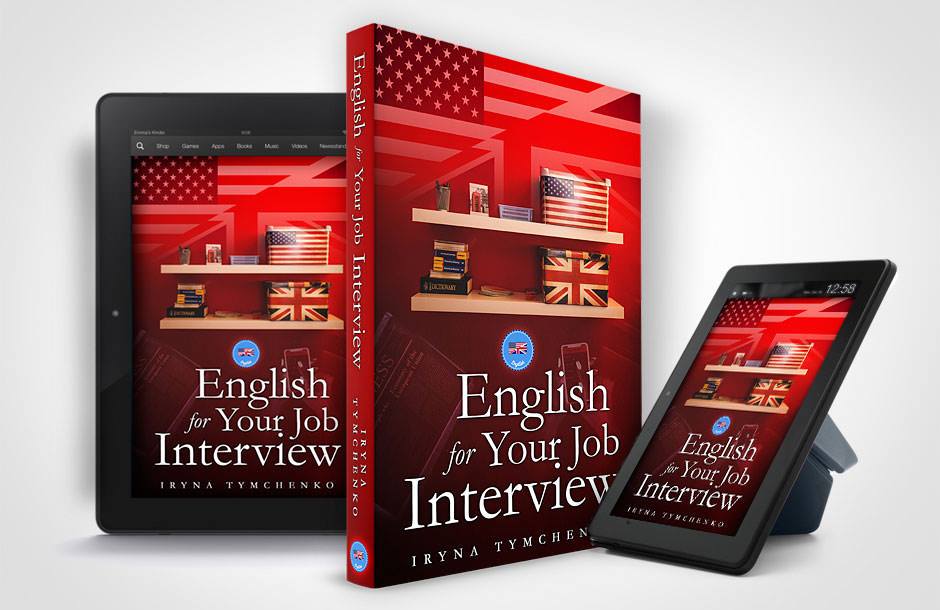
  • New: English for Your Job Interview

  • Follow me on Twitter

  • An Interview

  • Recent: Romantic English Phrasebook

  • Recent: Romantic Russian Phrase Book

  • Languages & Lifestyles

  • Archives

  • Goodreads

  • 101 Books

  • Writing

  • Blogs I Follow

Shelf Love

live mines and duds: the reading life