
Due to the nature of my job, reading ‘eats up’ at least two thirds of my time every day, it has always been so. The rest of the time goes on writing and living my human life, but this kind of lifestyle leaves me little to no time for thinking– I mean, the efficient, productive thinking that normally leads us to something new.

As a teacher, I read through lots of student materials daily; I have to learn a lot, because otherwise I will have nothing to teach them. As a translator/interpreter, I have to know a lot and this makes me read endlessly about so many diferent things. As an author… well, I don’t even have to begin explaining it: reading is critical.
This is why whenever I read an article, a coursebook text, or a piece of fiction, I catch myself on thinking: “Eww, too many words! Too many words! Guys, please!” I want to finish every piece as quickly as possible, because my ‘to read’ list is itself as long as a novel.

I am sure I am not alone in this. Many people regret having to waste their time even when they are reading a fiction book with no practical reason, for pure pleasure. Time is becoming our strictest warder; we simply can’t afford to spend days on reading a book anymore.
I thought I found an answer by starting to listen to audiobooks when I am in gym or while cooking and doing stuff with my hands. It helped, not for a long time, though. My ‘to read’ list is still growing fast, and my time is still slipping away.
Some colleagues suggest that it’s good to study speed reading. I am sure it is, but is this going to solve the problem? Just a little, but– no, I’m afraid. I believe that we are going to end up inventing a way of speed thinking soon. But isn’t thinking in a hurry the most dangerous business of all?
I think the best answer for readers would be to ‘brush up’ their ‘to read’ lists and start reading more selectively, while writers will have to accept the approach of condensed writing — when everything is put in the most precise and well-structured way, so that the reader can easily grasp the idea of every passage and quickly move on.
In fact, the process is taking place already, even for the fiction books. I just analyzed a dozen of bestsellers published in 2018 and compared them to a dozen of fiction bestsellers which were first published between 2000 and 2005. The results are very interesting: on the total, the more recent novels have become more ‘visual’ and imaginative (the descriptions are built to create fast images in the reader’s mind); the passages in novels have become shorter; there are more dialogs, in which sentences are becoming shorter, too, and it is not unusual to see chapters of the cize of a page anymore. As far as I know, this was not a usual thing in the literature published in the 20-th century.
So, condensed writing is taking over little by little. I think I need to study and compare more texts — who knows, maybe a deeper research is going to reveal more tendencies which I have not noticed yet?


 This is a picture of the famous Harold Lloyd’s Christmas Tree of 1974. According to some Internet resources, it took the Lloyds family a whole month to decorate it. Well, I have no idea how much this giant could weigh, but–


 Human luck is real, and it is a she. I have always known this with my subconscious mind, and now, when I have spent enough time studying it, I have learned to stay inspired with it. Luck shows itself to those who really want to see it, and Alice Hoffman’s words are correct: you don’t know if it is good or bad until you have some perspective.

 Rejections wear you out. They kill inspiration and boost the author’s inferiority complex, especially when the writer is new to the publishing world. When taking their first steps in fiction writing, the debut authors have no experience to rely on, and quite often, they have noone to ask about the industry’s ‘rules of conduct’. At the same time, it is very important for a beginner to build some expectations about what they are going to face.


 It was a significant thing for me to watch that sun beam creep over Crome Yellow cover every morning: it helped me choose my directions in life. I am thankful to Huxley for this, because he could convince me so gently! Nothing really happened, but I came to the most important, life altering decision. Isn’t it what distinguishes a real classic from a scribbler?


 His drawings, as well as writing sketches are usually scattered all over the page, which shows how thoroughly he used to put together little pieces of ideas, scattered thoughts and observations to develop every scene, description, or dialog.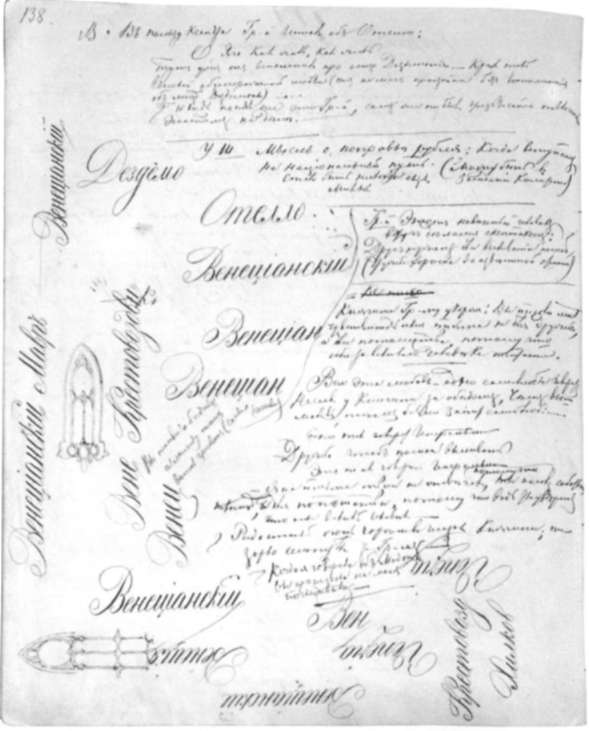



 Share love. Educate. Inspire.