Suspense… in Life and in Fiction Writing

 I have been reading about the role of suspense in fiction writing and, as it often happens in the world of writers, I found a number of excellent articles describing features and merits of suspense, but none of them provided a decent definition of the term. Some works characterize suspense as a “sense of anticipation or worry that the author makes the reader feel” (https://prezi.com/wyt6zmamrm9w/elements-of-suspense-in-literature/ or http://elementsoflit.weebly.com/foreshadowing-and-suspense.html), which provides general understanding of the role of suspense, but is a bit misleading because, according to this description, suspense is a human feeling: an emotion, that’s all.

The scheme which I posted above presents suspense in one row with other genres of literature: mystery, horror. It is not the first time that I see attempts to present suspense as a whole separate genre of litreature:

“So, you’ve been working on a new novel… what genre? Historical again?”

“No. Suspense.”

“Ah, I see.”

Maeve Maddox, the author of the article ‘Is Your Novel “Mystery,” “Thriller,” or “Suspense”?’ (https://www.dailywritingtips.com/is-your-novel-mystery-thriller-or-suspense/) calls suspense a separate genre of fiction, with a note that “sometimes the three are presented as separate genres, and sometimes they’re lumped together as Mystery/Suspense, or Suspense/Thriller”. This shows that many authors and critics today have realized that suspense is not necessarily a mystery or horror, it is something different, because its meaning has changed for the reader. The reader sees suspense as a puff of obscurity on her face.

Suspense2

Suspense is not necessarily a mystery or horror, it is simply a puff of obscurity on your face.

“SUSPENSE: the main character may become aware of danger only gradually. In a mystery, the reader is exposed to the same information as the detective, but in a suspense story, the reader is aware of things unknown to the protagonist. The reader sees the bad guy plant the bomb, and then suffers the suspense of wondering when or if it will explode.” (Maeve Maddox; Please, find the link above)

This description corresponds well with the above scheme and also shows specificities of suspense as a high-grade genre of fiction literature. So I have been wondering: isn’t it a sign signaling to all authors that a new genre has been born and is actively building its way into the list of “traditional” genres of fiction? Can I write in a letter to a literary agent: “My novel is a suspence with some elements of fantasy”, or would it be safer to call my novel a “suspense fantasy”, where the main accent falls on the word “fantasy”?

Can we call suspense a genre of fiction? If yes, how ripe is the genre today? Somehow I have no doubt that suspense will soon form into a separate, widely accepted genre of lirature, because in the 21-st century people who read are seeking for fast-paced, action-packed, yet emotional fiction, and suspense is exactly what they need, because it apeals to the readers’ hearts.

In their reviews of suspense, some authors just leave it without a definition and move right on to discussing the distinguishing qualities of suspense fiction in comparison with other genres. Here is, by the way, a very good analysis by Stephen James, called Six Secrets to Creating and Sustaining Suspense, available on Writers Digest at http://www.writersdigest.com/online-editor/6-secrets-to-creating-and-sustaining-suspense. In this article, the author looks at four factors necessary for suspense – reader empathy, reader concern, impending danger, and escalating rension – which are regarded as the author’s roadmap to the readers’ hearts. Then, the author suggests six ideas, or tasks, which a writer should set and achieve to create a good suspense effect in a piece of fiction:

  • put characters in jeopardy;
  • include more promises and less action;
  • keep every promise you make;
  • let the characters tell readers their plans;
  • cut down on the violence; and
  • be one step ahead of yur readers.

These tips, along with the detailed explanations provided in the article, must be very valuable for every author, as they set direction for an author’s effort, and still, these are just tools of suspense as a writing method, they are not the laws of a genre… yet.

Stephen James concludes his article with the words-

“No matter what you write, good prose really is all about sharpening the suspense.”

Well, if this statement is true, it does not make suspense a separate genre yet, but it surely makes it even more: a cross-genre requirement, a condition of achieving high quality of writing, a goal to which every author should strive, regardless of the genre they are trying to conquer.

Well, to me, the question is still there: what place does suspense have in contemporary literature? Is it already a separate genre or is it rather a method of writing?

Do you believe that in a couple of years, when more suspense masterpieces have arrived, all book stores will install shelves with a one-word sign “SUSPENSE”?

If you have answers to these questions, please, share. I will appreciate any comments on this. Thank you.

suspense3

Today, suspense is a method of writing, which is making its way to become a separate genre of fiction.


The Challenges of First-Person Narrative

“I would so hate to be a first-person character! Always on your guard, always having people read your thoughts!” ― Jasper Forde, Lost in a Good Book

Elephant-Sitting-Thinking-Contemplation-H

Writing from the first person is a big challenge, I realize it more and more every day. The most important thing is to keep the reader interested at all times, which means that the character has no right to be boring, even for a single moment!

When writing from the first person, it is very important to keep rational balance between narration and dialogue: if I allow my character to ramble, I’ll kill the readers interest in a few pages, but too many dialogues may be killing for the whole novel, too.

Then comes the necessity to follow “show not tell” rule: one of the most difficult tasks, because if I am the one who tells the story, I often have a temptation to simply tell it and go on.

Also, my character needs to have the voice – I mean, my character happens to be the one who experiences stuff and then learns the lessons and makes the conclusions – to accomplish the goal of the whole writing. My character becomes the one who sets the questions and answers them for the reader at the same time: the situation which seldom happens in real life and thus, is difficult to reproduce in a reader-attractive manner.

Finally, if I want to grab the readers’ attention and keep them excited to the very end, my character should continuously explore her own personality and “alter” it as she moves forward with the plot. The gradually accelerating pace of the narration should be inseparably connected with personality dynamics of the main character, and once this person is telling the story, she needs to take every step consciously, but then it is difficult to keep the air of mystery in the book: the story risks to become too predictable to be interesting! This is another challenge for the author.

It seems, I need to be a Mark Twain to do such a thing well enough! Talent, plus wit, plus tremendous life experience, plus really hard work, ah, yes – plus the ability to learn from one’s own mistakes: this is the formula of success for the task of writing a first person narrated story. Quite a complex one, don’t you think? 😉


Feeling Time

“The two most powerful warriors are patience and time.” Leo Tolstoy

eggLike in many other cases, one can begin to understand these words only after having a massive experience of conscious expectation for something significant to happen, and then living through the event as it happens. Only having waited for years to meet the one you really love, you can say that you know the science of being patient and the burden of “feeling” time.

Feeling time is a burden, because it is a torrent that flows through and beyond us; it carries us forward – always in the same direction – and we can do absolutely nothing about it. Time has its powerful plan for every one us, but no one of us has the power to alter anything in the plan.

Doesn’t this make Time the greatest antagonist of all? Mmm, I really need to think about it…

time


Writer’s Self-Promotion: Short or Wordy?

self-promotion

This morning I came across a letter from a writers’ magazine to which I am subscribed. It suggested to take a look at ‘a special offer for readers’ from their trusted partner. As I have a habit to read every email I receive, I read it through. The announcement started with a massive energy injection in a form of a greeting:

“Fellow Writer,
What if I told you-”

The greeting was followed by a 1300-word-long biographical description of the author’s way to financial happiness, suggesting me to do the same and promising to tell me how to do it, for this price if I subscribe here, or for that price if I sign up there. In my case, the ‘energy injection’ stopped working after the first passage, so by the middle of the second passage I was beginning to regret loosing my precious morning time on reading something that I probably don’t need.

Still, my female curiosity took over, so I switched to speed-reading and finally, on the last passages of the email, I realized that the announcement was about membership in a writers club! Finally, the P.S. part of the email, which was two passages long itself, contained more practical information on the cost and free bonuses that the club membership offers.

All in all, I spent nearly quarter of an hour reading through and digesting the information; then I caught myself on thinking that, according to the length of the message, the membership might be so overwhelming that I would have no time left for doing my writer’s job in the end!

brevity2

Again, I remembered the main requirement dictated to us by present time: brevity. Probably, I am giving it too much attention, but I really believe that today, brevity is a crucial requirement, even for such a specific business as self-promotion. If I were to write that announcement, I would cut it down to two hundred words, or even less. It is so easy today to simply provide links to pages with more detailed descriptions of any ideas or events!

In the end, self-promotion is all about attracting your audience by a few keywords. When you want to attract visitors to a pub, you only need to write a short sign: “BEER HERE”; it is the same with the virtual world we work in. Create a short slogan, give it a short description on your website, and discuss it in your blog, then, don’t forget to link all those pieces of information to each other! Doesn’t this look easier than writing miles of text trying to convince your audience? Not to mention that time is the most precious thing we have, so we should not steal each other’s time by writing lengthy announcements.

Please, tell me if you think this is not right. I will gladly discuss every opinion. In the end, we are all in the same boat: we need to know how to self-promote. Thank you!

dog-writer

Overcoming Writer’s Block

Writer’s block is a condition, primarily associated with writing, in which an author loses the ability to produce new work, or experiences a creative slowdown. The condition ranges in difficulty from coming up with original ideas to being unable to produce a work for years. (Wikipedia)

beautiful journalist looks typewriter

It was a surprise for me to discover how much has been written about writer’s block in English. In my culture (Russian), the same thing is called творческий кризис (‘creative crisis’) or творческий затык (‘creative block’), and quite often, authors are shy to discuss this intimate state of mind, because it is associated, in the first place, with weakness of character. Russian authors usually suggest three steps of overcoming the block:

  1. Push away your fear by allowing yourself to write bad. If you ignore others’ remarks about your bad writing and simply go forward, your writing will improve.
  2. Your lack of ideas comes from the lack of knowledge. Learn more about the subject of your writing (the time which you are trying describe, the psychology of people, the place where you build your scenes, etc.) and creative ideas will pour into your head.
  3. No procrastination! Do not allow yourself to think about doing it tomorrow. Sit down and write. Do it now.

These three simple rules really help. Why don’t you try them if you have a writer’s block?

“The secret of getting ahead is getting started. The secret of getting started is breaking your complex overwhelming tasks into small manageable tasks, and then starting on the first one.” — Mark Twain

As a bonus, here is a link to a wonderful collection of quotes by worldly-known writers about overcoming writer’s block from Ken Miyamoto’s blog

“I don’t believe in writer’s block or waiting for inspiration. If you’re a writer, you sit down and write.” — Elmore Leonard


The Principle of Brevity in Writing

writing brevity

Today, in our fast-paced world, time has become the greatest of all values. We, people, still have not fully realized this fact, but it already dictates us the necessity to introduce some changes into our lives – first of all, in the field of time management

The dwellers of large cities (New York, London, Tokyo, etc.) were the first to sense the change: they had to reduce the time spent on walking, cooking, cleaning, driving, socializing, learning, and so on and so forth, including the time spent on reading. Today, smaller cities confidently follow megacities, while the pace of life continues to accelerate, forcing us to revise our professional habits, too.

Have you noticed that more and more people tend to skip reading long texts, even if they are beautifully written and contain brilliant ideas? We seem to give preference to visual, well-organized, simplistically laid-out, or even bullet-structured information. When we revise a book of fiction, we tend to say (more and more often these days), “It’s a good book, but a little too long. It would be better if it was one third thinner…”

The reality makes every author to face an inevitable phenomenon: we don’t only have to write quickly, we also have to adhere to the new principle: the principle of brevity in writing. The rule is simple: the shorter is your post (article, story, novel, etc.) the better, because brevity in writing shows the author’s respect for their readers’ time.

writing brevity3

This fact may upset those authors who love writing long pieces of speculative prose. Certainly, there will always remain people who will love reading very long novels, but the number of such readers will continue to reduce. Well, this is the trend of the new Millennium! I am afraid, we have nothing else to do, but adjust.

I will try to be short here, too, and wrap up this one here. As a postscriptim, to please your eyes, I will finish this post with beautiful words by Aldous Huxley, written in 1958, which have become even more timely today:

However elegant and memorable, brevity can never, in the nature of things, do justice to all the facts of a complex situation… On such a theme one can be brief only by omission and simplification… In practice we are generally forced to choose between an unduly brief exposition and no exposition at all. Abbreviation is a necessary evil and the abbreviator’s business is to make the best of a job which, though intrinsically bad, is still better than nothing. He must learn to simplify, but not to the point of falsification. He must learn to concentrate upon the essentials of a situation, but without ignoring too many of reality’s qualifying side issues. In this way he may be able to tell, not indeed the whole truth (for the whole truth about almost any important subject is incompatible with brevity), but considerably more than the dangerous quarter-truths and half-truths which have always been the current coin of thought.” A.Huxley, Brave New World Revisited.


writing brevity2


A Few Thoughts About Ethics in Writing

WriteEthics3

Interestingly, while ethics are huge in technical and academic writing, it is not given the same attention in the world of fiction writing. As an author who belongs to both groups, I have been watching the difference and wondering why? Could it be because scientists have to be more accurate about every word they write? Or maybe, the fiction writers are in any way more (or less) ethical than technical writers, so they don’t need to set up any rules of fiction writing ethics? 😉 I want to believe that both groups equally care about their readers and this difference is nothing more than a tradition, so nobody ever asks the question.

Ethics codes are present at the workplace: even if they aren’t always enforced, they still exist and we obey them… often mechanically, without thinking. Summing up a dozen of articles which I studied in search for an answer to my question, there are a few basic points to adhere to whenever you are writing a professional document:

  • don’t mislead;
  • don’t manipulate;
  • don’t stereotype; and
  • always check the facts.

Well, I did a thing which I may regret doing: I tried to apply these rules to fiction writing this morning… and found the reason of my writer’s block! I realized that everything fiction writers do is exactly the opposite of the four rules!

Unlike academic writing, which is all about sharing facts to feed the work of mind, fiction writing works with reader’s imagination and emotions; it’s principal idea is to mislead, manipulate, hide (or distort) facts of real life with the only purpose of creating stereotype universes in the readers’ minds and enticing them into reading! 

Does this mean that fiction writers are unethical, immoral, dishonest, improper, corrupt, unrighteous, unjust and… (could not think of more antonyms to the word “ethical”, sorry)?  Uh-huh, I kind of regret I took up the topic already!

To calm myself down, I decided to accept the following explanation: fiction writers have to break those rules of ethics. Like mathematicians, who sometimes look for a proof by contradiction, fiction writers need to show their readers a ‘different’ world, where rules are broken and norms are corrupted; we only have one rule to follow: we must expose the fake in the end. If writers did not do this, the world would never get to know “Alice in Wonderland”, “Winnie-the-Pooh” or Harry Potter books! These books mislead, manipulate, create unusual stereoptypes, and distort our reality, but they do this so awesomely well that no one can resist reading them again and again!

So, what is the answer? Is it ethical for fiction writers to ignore the ethics of academic writing? 😉 The question is still up!

Please, share your thoughts, I am very curious to know your opinions on this.

pooh1


My Protagonist of the Opposite Gender…

good-guy-vs-bad-iclipart

One of the hardest things to do as a writer is to write someone who is not yourself.” – George R.R. Martin

Writing a whole book from the name of a particular person is always a challenging task, but choosing a protagonist of an opposite gender is a real test for every author. I am doing this for the first time now, so I have been trying to adjust to the funny sensation of having a whole new personality – a male one – living inside me. 

The first confirmations of his presence started coming when I was thinking over the plot, and since then my protagonist has been growing through me like a plant that breaks through layers of soil to see the sunlight. Wow, what an interesting sensation! My first thought was that I was going crazy, but then I found similar feedback in the blogs of many authors. I completely agree with this comment by Cristina Hartmann: “I string words together and hope for the best. All characters, regardless of gender, have a part of me in them. No matter how seemingly different a character may be from me, they all have something in common with me. I put a little of myself in every character I write. In that sense, gender is irrelevant.”

When I write a character, I cannot go only with his/her general gender characteristics: I must imagine and draw a whole colorful picture of the character’s personality traits. Besides this, I may give a character an atypical quality: a male character may love planting roses, while a female may entertain herself by solving math problems in evenings. These unusual qualities may look like pesky imperfections at first, but they often lead my character toward some significant and exciting events, and eventually, the character is supposed to win the readers’ sympathy.

It is important to pick out some easily recognizable, but still quite unique character traits, because this helps the reader find connection between their mental image of my character and someone who they already know from real life: such character can keep the reader excited and interested to read the story to the very end. Secondly, the character’s imperfection should be charming; it is always a good idea to turn it into the character’s power at some point in the story (a stutter that suddenly helps them meet their love, or disarming shyness, or clumsy forgetfulness – anything).

It seems to me that the most difficult thing is to do this with a novel protagonist, especially if this is a person of an opposite gender, and even more – if he/she is the narrator of the story.

Kristen Houghton in her article “Writing As Your Opposite Gender Can Be Successful” wrote: “There are some things to remember when writing in your opposite gender voice. Understand that your character is unique and not a metaphor for the entire gender. The same is true when writing about ethnicity, race, religion, or social classes. You’re not generalizing about entire segments of society, you’re being specific about one character. As far as characters go, it pays to remember that not all women think and behave alike, and neither do all men… If my goal as a writer is to help my readers expand their life experiences through my writing, then my success will depend mainly upon my talent and technique, not on my character’s gender.”

My biggest goal in writing is to draw my characters so realistically that every reader would recognize someone they know in them. I believe that the only right way to do this is to write my characters completely from my own experiences.

I found a similar opinion in an article by Avory Faucette: “…the difficulty comes when describing an experience I haven’t had, which is more about others’ perception of me than about my own gender… I feel comfortable writing characters with similar hopes and aspirations and experiences to my own, and that makes it difficult to write someone who is not college educated, who is much younger or older, who is an immigrant, who is a person of color, etc.”

Sheri Fresonke Harper: “I think people in general have a blend of both feminine and masculine traits and interests… Often we pick up voice, mannerisms, and other characteristics of character from our experience with the world so that when we write from the perspective of another sex, we’ve seen the world through the eyes of people of that gender that have said the same thing, thought the same thing, acted the same way.”

This is true. Men and women aren’t that different, but they face quite different social roles and as so, their behavior is not the same.” Even the very fact of choosing to write the protagonist of the opposite gender shows that the author has made a commitment to explore a new social role and is willing to share that new knowledge with others.

It was a surprise to see that some authors find the task quite entertaining. I loved this comment by Eli Havoc: “It’s really easy. I was told once, by a female friend “we think just like you do, except we’re constantly worrying about how we look.” And that piece of advice had worked very well for me. I wrote a book written in first-person, once, with a female main character, and have gotten several comments from readers that go something like “Jenna’s character is so real! How did you write a high-school girl so believably?”

With all this being said, everything still seems to boil down to the author’s talent and brilliance in writing technique. In fact, the protagonists’s gender becomes nothing more than a tool which the writer decides to use in order to deliver the main idea of the book. Well, let us proceed to writing then! In the end, if I am a good writer, I should feel comfortable writing characters of either gender. Do you agree with me?

good_guy_protagonist2

About English Verbs

Об английских глаголах (статья для изучающих английский язык)

EN_Verbs
Каждому, кто изучал английский в школе и в институте, знакомы понятия о правильных и неправильных глаголах (к первым относятся те, которые в прошедших временах заканчиваются на -ed – to like – liked, to want – wanted, to jump – jumped, а у неправильных есть свои собственные формы прошедшего времени: to break – broke – broken, to cut – cut – cut, to see – saw – seen). Помимо этого, школьные учителя рассказывали нам, что существуют глаголы смысловые, и какие-то вспомогательные, и некие модальные глаголы и даже глаголы-связки, но уж этих понятий почти никто в большую жизнь из школы не вынес. В этой статье мы коротко напомним вам о них.

Смысловые глаголы в английском не награждены особыми приметами, этим термином обозначаются все глаголы уже только за то, что они обозначают действие, а следовательно, используются в предложении для описания разнообразных действий.

Jack writes books. Джек пишет книги.

My friend studies biology. Мой друг изучает биологию.

Please, call me at five o’clock. Пожалуйста, позвони мне в пять часов.

А вот вспомогательные глаголы имеют свою специфику. Их всего пять, это глаголы to be, to have, to do, а также слова shall (should), will (would), которые тоже принято считать глаголами, хотя на самом деле никому вообще непонятно что это за чудо-юдо. Вспомогательные глаголы совершенно несамостоятельны: их можно использовать в предложении только в сочетании со смысловыми, то есть всеми остальными, нормальными глаголами, помогая образовывать любые времена или, например, делать из положительного предложения отрицательное или вопросительное.

Теперь скажем пару слов о каждом из них.

Глагол to be уникален на фоне остальных английских глаголов, потому что у него с древних времён сохранилось несколько форм:

– в настоящем времени он приобретает формы am (для первого лица), are (для множественного числа) или is (3-го лица, единственного числа):

I am driving to work. Сейчас я еду на работу.
He is writing a letter. Он пишет письмо.
They are waiting for you. Они ждут вас.

– в прошедшем времени у него две формы: was (для единственного числа), were (для множественного числа)

He was writing a letter when I called. Он писал письмо когда я позвонил..
They were waiting for you at 12:30 yesterday. Они ждали вас вчера в 12:30.
– в будущем времени он приобретает форму will be :

They will be waiting for you tomorrow at five. Они будут ждать тебя завтра в пять.

Вспомогательный глагол to do используют для построения вопросов или отрицаний, причём в настоящем времени имеет форму do или does (для третьего лица в единственном числе), а в прошедшем времени – did.

Do you know her? Ты ее знаешь?
She doesn’t live in this house. Она не живет в этом доме.
Did he go to school last Friday? Ходил ли он в школу в прошлую пятницу?

* Вам вероятно приходилось встречать и такие фразы:

Do you do this exercise daily? – Делаешь ли ты это упражнение ежедневно? – здесь “do” появляется два раза: первый из них – это как раз вспомогательный глагол, который служит для построения вопроса, а второй в данном примере выступает как обычный смысловой глагол “делать” (to do) в настоящем времени.

Глагол to have тоже используют для построения разных временных конструкций, включая вопросительные и отрицательные предложения. В настоящем времени он имеет формы have или has (для 3го лица в ед.ч.), в прошедшем времени – had, в будущем времени will have.

My mother has been to Spain. Моя мама бывала в Испании.
He had seen this movie before we saw it. Он видел этот фильм до того, как мы посмотрели его.

will служит для образования форм будущего времени.

Will you go with me? – Ты пойдёшь со мной?

Shall теперь используется совсем редко: только, когда мы сомневаемся и хотим задать вопрос, следует ли (стоит ли) нам что-то делать –

Shall I write it down for you? – Не записать ли всё это для тебя?

Shall I help you? – Не помочь ли тебе?

А формы should или would помогают обеспечить согласование между разными временами в сложных предложениях:

My husband said that he would be in office. Мой муж сказал, что будет в офисе.

She thinks she should go there by herself. Она считает, что ей следует идти туда одной.

Есть ещё в английском несколько модальных глаголов, которые дают возможность говорящему выразить свое отношение к происходящему или различную степень уверенности (неуверенности) в действии. Это глаголы can (could), may (might), must (had to), need, ought to, should, have to, to be to. Многие из них обладают способностью самостоятельно строить вопрос:

May I help you? (Do I may help you?) Могу ли я вам помочь?

Can you call him now? (Do you can call him now?) Можешь ли ты позвонить ему сейчас?

У модальных глаголов есть свои секреты и о них стоит написать отдельную статью; мы это сделаем в ближайшее время.

А так называемые глаголы-связки – или фразовые глаголы – привязывают к себе другие слова, чтобы получить составное сказуемое:
be, become, keep и некоторые другие:

to become clever – становиться умным,

to keep well – держаться молодцом.

Некоторые глаголы могут одновременно относиться к разным группам глаголов (например, be, do, have), потому что способны выполнять в языке самые разнообразные функции. Более подробно о каждой из групп глаголов мы поговорим в отдельных статьях. Оставайтесь с нами!

“Cooking” Blog Headlines: My Signature Dish

signature dish 001

Correct me if I am wrong, but I believe that a smartly chosen headline can sell even an average article. Headline is the face of every text composition or document, no matter if it is long or short, creative or strictly logical, artistic or business-like. Every word of a headline works to represent the whole composition in search engines, in email, on social media, and can either attract the eye of the reader or do quite the opposite thing, which makes the task of crafting the headline crucially important.

Being a mother and wife with decades of experience in the kitchen, I can’t help but compare this process with cooking. Cooking is a skill, which – when properly used – can turn my daily work of processing food into a very satisfying, creative and surprisingly effective activity. Moreover, it gives me a chance to share my creative work with others… just like with blog writing! See for yourself: to cook a good dinner, we need to take care of four things-

  • to know what we are going to cook (a simple way to talk about goal setting);
  • to develop a method and a sequence of doing it;
  • to have necessary food ingredients and the kitchen equipment at hand; and
  • to decorate the final product and serve it properly, in order to get the best appreciation of the diners.

Well, this daily cooking scheme looks amazingly similar to blogging process, don’t you think? Cooking a blog article seems to follow the same methodology!

signature dish 01

I try to write for my blog quite regularly, so the task of giving names to the articles comes up a few times every week. The method I have developed is a kind of a recipe for cooking blog titles. These are the steps I take:

Step 1. Select 3-4 keywords

While I work on the article content, I write down 3-4 keywords, which describe the main idea of my article. These words usually become the basis for my working titleFor example, when I started writing this article, I picked four key phrases: blog article, create a title, craft a headline, headline writing howto (the idea to compare it with cooking process came to me later). This first step is very important, because it helps me set the direction of my thoughts, and then I check every passage of my article with the key phrases to see if the content corresponds with the working title.

Step 2. Answer the seven questions (below)

When the first draft of my article is ready and I have the working title, I can proceed directly to designing the final title. To do this, I ask myself a few questions-

  • Should I create a witty, inciting title or rather craft an informative headline*?

  • Who may want to read an article with this title/headline?

  • What words should I use or avoid in the title?
  • Is my title/headline catchy enough?
  • How long should my headline be?
  • Does it correspond to the content, structure, and style of my article?
  • Does my headline include the necessary keywords (is it satisfactory to both, my readers and the search robots)?

*There is some difference between the notions “title” and “headline”. To read more about it, go to page: http://blendmagazine.org/blog/2009/02/27/headlines-vs-titles/

Step 2 is the most creative one. I try to imagine my readers and, depending on how I visualize them, I come up with ideas of style, manner and length of my title. I won’t go into lengthy discussions here. You can simply apply these questions to an article that you are writing at the moment, and some ideas will flash in your mind right away.

Step 3. Personalize the title

To make my title attractive to many people, I need to enrich it with an emotional component. Some authors would express it by the phrase “make it sexy”, I would rather call it personalizing the title, which gives my readers a promise that, along with sharing the basic information, I will share a little about my personality. This makes me closer to the reader and simplifies the task of disclosing the subject of my article. Sometimes at this step I come up with an idea (like the one about comparing crafting of blog titles with the process of cooking), which makes me revise the whole article and sometimes rewrite it. But in most cases, revisions make the article better, so I don’t mind…

Step 4. Decorate and serve

At this step the article is finished and the title has been cooked. If I am satisfied with everything, I can proceed to publishing it in my blog. Quite often, I revise my articles days and weeks after they were published, and recently I found out that I am not the only one who does so. Honestly, I never expect the blog articles to be perfect: this is what blogging is about, isn’t it?

A blog article should be fresh and inventive in thought, but it does not have to be coursebook-precise or academically elaborate, it should simply catch the readers’ attention and provoke them to think. This is why I added Step 4 to my recipe. “Decorate and serve” means: make it visually attractive. Do not forget to develop a clear visual structure: break it up into easily identifiable parts, add numbering and bullets, or do whatever is necessary to make your article dish look edible and delicious.

Then, finally, add illustrations and serve.

signature dish 3

Here is a little bonus for you:

To read more on the topic, you are welcome to go to blendmagazine.org, where, inter alia, they provide a classification of article headline types. Enjoy:

7 Types of Headlines

http://blendmagazine.org/blog/2009/02/27/headlines-vs-titles/

1. The Know-it-All: these headlines offer practical advice or tips.

2. The Teacher: these headlines teach you something you didn’t already know.

3. The Gossip: these types of headlines stir up controversy, pique your interest, and often have you asking “and then what happened?”

4. The Instigator: these headlines make bold statements, which may or may not be true, but they make you want to click to find out.

5. The Nay-Sayer: these headlines convince you that what you don’t know will hurt you.

6. The Campaigner: these headlines provoke people who have similar problems or issues to click on the articles and connect with other like-minded people.

7. The Connector: these articles show the connection between two seemingly unrelated things.

  • Follow Share love. Educate. Inspire. on WordPress.com
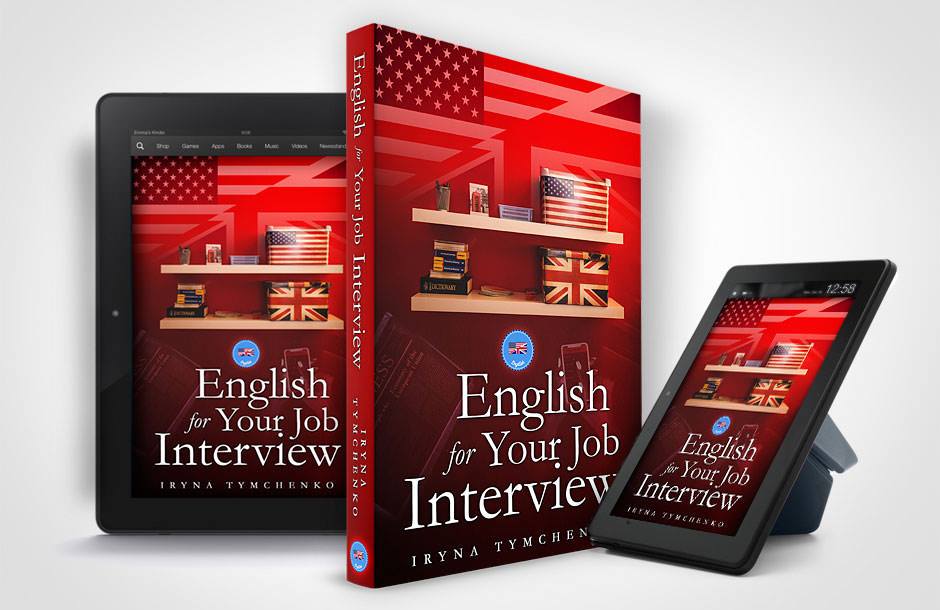
  • New: English for Your Job Interview

  • Follow me on Twitter

  • An Interview

  • Recent: Romantic English Phrasebook

  • Recent: Romantic Russian Phrase Book

  • Languages & Lifestyles

  • Archives

  • Goodreads

  • 101 Books

  • Writing

  • Blogs I Follow

Shelf Love

live mines and duds: the reading life