Leo Tolstoy and His Twitts

leo-tolstoy-2

If Leo Tolstoy lived today, he would probably sue Twitter for limiting his ability to express his ideas in their full length and beauty… or maybe he would not because, believe it or not, Tolstoy has written hundreds of short, yet astoundingly wise sayings, for which Twitter gurus must envy him. Here are a few of them:

  • Power of one person over another kills the powerful one first. (Власть одного человека над другим губит прежде всего властвующего.)
  • Patriotism is slavery. (Патриотизм есть рабство.)
  • Live your life so that you don’t have to be afraid of death or desire it. (Надо жить так, чтобы не бояться смерти и не желать её.)
  • I am positive that the world is being ruled by insane people. (Я серьезно убежден, что миром правят совсем сумасшедшие.)
  • Do not be afraid of lack of knowledge; be afraid of false knowledge. In it is the root of the world’s evil. (Не бойся незнания, бойся ложного знания. От него все зло.)

I will gladly share more in my future posts. I would not want to overload every poist with information, and these five short statements by the great thinker can “load” one’s mind for all day! Do you agree with me?

The Faster Millennials Breed, the Less the Book Authors Eat…

reading-2

There is an interesting paradox: in the new millennium, again, like in good old days, reading has become a privilege of a few. Centuries ago, the main obstacle to reading was mass illiteracy, so authors knew that their writing could only be appreciated by a thin social group of well educated and relatively wealthy. Today, when everyone can be a potential reader, the authors are facing a problem again: the short era of mass, unlimited reading is over: the millennial generation lacks time. By a trick of fate, the only shortcoming of reading – the fact that it is quite time-consuming – seems to negate all of its precious powers, because in our crazy world time has become the most valuable asset of all.

A good novel takes days (sometimes weeks) to read, while a good movie is visual and fast: a movie “retells” you the longest book in as little as an hour or two, so books can no longer compete with such means of information transfer as television, movies, computer games, or the Internet, which altogether have turned the process of reading into nothing more than a careless time killer. With all the technologies available today, I am surprised that books still remain in vogue at all.

All in all, the authors of new books have to face it: the niche is rapidly thinning. Within a decade or so, reading is going to turn into a special treat, or hobby, appreciated only by the extravagant few, like listening to vinyl records or taking pictures on a film camera.

What does it mean to authors then? I guess two thirds of all authors will be kicked out of business in the nearest few years, while the quality standards for writing will soar up higher and higher.

An opponent might suggest that reading is good for our mind, it develops emotions and feeds our soul, it is undeniably healthier than anything else the technologies can offer… Yes, of course, this is true. Still, the tendency is quite clear: in the 21-st century, reading has become an unaffordable luxury, and the process is only beginning to develop.

With all this in mind, every new author should be realistic and not put all eggs in one basket: making a living by just writing books is hardly a good idea today. Even the most captivating novel may fail to attract the desired number of readers, simply because of the fact: most of them realize that they will never have time to read it.

Beerlosopher Vasya… or the Russian Approach to Dating

flash_beer-lovers

1.

If you don’t know where you are going, any road will get you there.” Lewis Carroll

One day philosopher Vasya took his beer and decided to leave.

Hey! You! Are you going to pay?” The saleswoman yelled at his back.

I could pour you with money,” he said, slowly turning around, “but money is transient.” He hiccupped. “I could enrich you spiritually, but that would be only words. No one can make you rich, only you – yourself – can.”

Where can I find you, Teacher?” Murmured bewildered saleswoman.

If you don’t know where you are going, any road will get you there,” quoted philosopher Vasya, and added, You won’t have to look for me, I will come by myself… as soon as I run out of beer.”

flash_beerlosopher_vasya_kiosk3

2.

The journey of a thousand miles begins with one step.” Lao Tzu

Later that day, philosopher Vasya came along to fetch a new bottle of his favorite drink, but the saleswoman was already closing the kiosk.

Will you give me some drink of enlightenment?” He asked humbly.

My working day is over. Come tomorrow, I will gladly give you some,” replied the saleswoman.

But I need it now, because now I’m closer to enlightenment than ever.”

The kiosk is closed,” she said sharply. “I can see no sense in following my own footsteps.”

Philosopher Vasya looked right into her eyes. After a long, thoughtful pause, he uttered: The journey of a thousand miles begins with one step.” He raised his forefinger. You can’t come to enlightenment unless you change your Self, and changing your habits could be the very first step on the way.”

He turned around with dignity and headed for another kiosk.

flash_russian-beer-dried-fish

3.

Think big thoughts but relish small pleasures.” H. Jackson Brown, Jr.

Next day, on his way to the beer source, philosopher Vasya could not restrain himself and relieved his physical need right near the kiosk wall. The saleswoman saw this.

What are you doing?!” She shrieked and ran out of the kiosk.

She had beautiful shoulders and gorgeous hips.

Think big thoughts, but relish small pleasures,” replied philosopher Vasya, as he eyed her up. Her gorgeous hips swayed like fishermen’s boats during the tide. Being angry only made her look better.

She approached him.

Tell me this,” she enquired rather sternly, “this wonderful drink that grants you true knowledge… it seems to pass through you without a stop. If so, why do you need it at all?”

All words of wisdom must be rethought,” philosopher Vasya announced. “This foamy drink, which shows us the way, passes through me, that’s true, but it sharpens my feelings and opens my mind, so I can get to know my Self.”

Next time, keep your Self away from my kiosk,” said the saleswoman briskly, and the gorgeous hips disappeared behind the door.

flash_diogen

4.

The only true wisdom is in knowing you know nothing.” Socrates

Later that week, the saleswoman put a corked bottle in front of philosopher Vasya.

Can you open it for me?” He asked.

I can’t open this foamy source of wisdom for you, I have no opener,” she replied.

Our daily mishaps are just rocks on the road. We should not neglect them, however, as they are our steps toward enlightenment,” answered philosopher Vasya and opened the bottle by hitting it hard against the kiosk wall.

I don’t know…” started the saleswoman, but philosopher Vasya had already turned his back to her.

The only true wisdom is in knowing you know nothing,” he said over his shoulder and took a swig of his drink in thirst for enlightenment.

flash_diogen

5.

I have just three things to teach: simplicity, patience, compassion.

These three are your greatest treasures.”
Lao Tzu

The next time philosopher Vasya turned up at the kiosk window, the saleswoman was not in it. A head in the window sneered as philosopher Vasya approached; it produced an empty beer bottle with a note sticking out of it. The note was handwritten and smelled of a ladies perfume. It said:

Simplicity, patience, compassion. These three are your greatest treasures. If you find them appealing, you can learn them from me, but remember: one’s got to deserve them by diligent, daily labor. You’ll be planting tomatoes and ploughing my land, only then you may hope that your foamy drink of enlightement will appear on your table… sometimes.”

flash_beerlosopher_vasya2

Writing Fiction Is an Art

writing2

To me, writing fiction has always been equivalent to creating artwork, because it is the art of influencing the personality of your reader, and reading fiction is nothing else but an acquaintance with a new world – the world as it is seen by the author.

Secondly, writing fiction means sharing your vision with others, and sharing is also an art. Like every other art, fiction writing is not supposed to share information – let us leave this to press, television and journalists – it is supposed to provoke emotional reactions, to make the reader feel and suffer.

Gustav Flaubert wrote that the art of writing is the art of discovering what you believe. To me, it is also the art of sharing your vision so masterfully that others could see it your way.

Fiction writing is also the art of working with other people’s imagination, which is a lot more difficult than just working with someone’s logics. To master the art, a good writer must be a little of everything: an artist, a linguist, a psychologist, a philosoper, and just an inspired individual who sees the unique sides of this world and can convey his vision to others.

Why I wrote a book about luck

clover

I remember having a dream once. In it, I was trying to figure out why I never give enough thinking to the problrem of luck. I was talking to a woman from work, who I hardly knew then, so even in the dream I asked myself in surprise: “Why am I seeing her in the dream? I never even think about her in real life.”

The woman was staring at me in the dream, and when I looked up, she said: “Luck is a spirit that lives in you until you fail to please it one day.”

“Really? What happens then?” I asked.

“It leaves you, so you lose your luck,” she said. And then, seeing that I was not paying attention, she added: “You don’t believe me. Too bad. It means that you lost yours ages ago.”

I woke up with a nasty feeling of having lost something, and that feeling kept coming back to me again and again during that day. Since then, I started thinking about luck. Later, I made Luck the narrator of my first novel.

I never happened to speak to that woman in real life after the dream. She left our team soon after that, and I did not hear about her for years. Just a few days ago, I ran across an old colleague in the street and we stopped for a few minutes to exchange some news and gossips – you know, the usual stuff. The first thing I heard from my colleague was the news that our former co-worker – the one from my dream – has been ill lately, and that she nearly lost her mind after a nasty divorce, resulting from an even nastier affair with another man, which also ended in nothing, but trouble.

I have been wondering: did she fail to please her luck at some point?

Blogging Is an Introvert’s Torture

Female student writing at desk

Blogging is a real torture for me as an incurable introvert.

(Here comes a 15-minute break sipping cold coffee and blankly looking at the line above.)

No. Blogging is not my strong side.

(5 more minutes of heavy thinking here.)

It feels like talking to a wall when you have to share your thoughts to a blog instead of chatting with a real audience. Having spent decades working with large and small groups of people every day, I am used to seeing people’s faces and receiving immediate reaction to everything I say. But blogging makes me feel like I have a sleeping patch on my eyes and a helmet over my ears. I must confess: to me, there is nothing cool about sharing my thoughts to invisible audiences. I guess, I am a bit old-fashioned here.

Robert E McGinnis and the Secret of The New Cover — Neil Gaiman’s Journal

I’ve loved Robert McGinnis’s covers for a very long time. I remember the first one I was aware of (it was the cover of Ian Fleming’s James Bond book DIAMONDS ARE FOREVER, when I was about 9. They put the film poster on the book cover, which puzzled me a bit because the plot of…

via Robert E McGinnis and the Secret of The New Cover — Neil Gaiman’s Journal

Writing Can Be Taught

Today, I have been reading “Plot and Structure” by J.S.Bell again. In introduction, the author says that he had wasted decades of his time not writing because since childhood he had been told that to be a writer one must be born with it (the gift of writing). He had also been told that writing couldn’t be taught. J.S.Bell writes,”I started to believe it. I figured I didn’t have it and never would. So I did other stuff. Like go to law school. Like join a law firm. Like give up my dream. But the itch to write would not go away. At age thirty-four, I read an interview with a lawyer who’d had a novel published. And what he said hit me in my lengthy briefs. He said he’d had an accident and was almost killed. In the hospital, given a second chance at life, he decided the one thing he wanted was to be a writer. And he would write and write, even if he never got published because that was what he wanted. Well, I wanted it, too.”

Al this sounds sadly familiar to me, and I am sure there are thousands of other people around the world facing the same fact: they never tried writing because they did not believe in themselves, and because everybody around kept convincing them that writing is a wrong way to choose. As well as music, and arts, and any other “impractical” occupations, by the way.

Still, those who are strong enough to overcome their shyness and finally do start writing, as well as those who are quite experienced – all need to learn. My strong belief is that one CAN learn how to write, moreover, it is as complicated as every other intellectual occupation, so it MUST be learned. It is never late to learn and there is never enough of learning. To me, a picture like the one below, is not an evidence of a writer’s failure. It is the evidence of a learning process, which is awesome.

learning_writer

Choosing a Title For Your Book

A few thoughts on choosing a title for your book

As a debut fiction writer, who has spent decades teaching science methodology and writing solely in the genre of science, I have been following writers’ discussions about creative writing lately with unspoiled curiosity of a child. There are dozens of topics in the world of fiction writing which deserve most careful attention, and one of the first among them is giving your book the right name. I find it as important as having a photogenic face for a photo model. The title is the face of your book, it can either help you attract potential readers or scare them away and make them run, mumbling under their nose, “if this is the cover, I’d better not look inside!”

BookTitle

No matter what genre your book belongs to, there are a few universal things which every author should keep in mind (and here the logic of a researcher speaks loudly in me): the title is an inseparable part of the book, which means it must

1) grow out of it (be consistent with it, if you like);

2) reflect the author’s principal message; and

3) identify the genre of the book.

Within a genre, there may be other rules and commonly accepted traditions, but the three above items are the identifying, basic principles for all books. If you call a romance novel “A Midnight Death In A Tunnel”, or call a detective story “My Sweet Emma”, your readers (not to mention the book store assistants and librarians) will be misled.

The title is supposed to set a tone for your book and create a certain expectation in the reader’s mind. A strong title is the book opener, which should entice the reader to look inside.

What is the trick of selecting the right name for the book then? I believe, every writer can help himself with the task by doing the following things.

First, you need to identify the genre of your book, because depending on it, you can set the right tone, or impression, or expectation. It is always a good exercise to put it down and take a good look at it. As an example, look a this: a romance novel “Rick, Deer Hunter” Does it look right to you? To me, it doen not. If my book’s message is to offer people more love and tenderness, I would rather leave this name to writers of adventure books.

To get the taste of commonly used names for your genre, look up a dozen of popular books in the same genre as yours. You’ll need to develop a feel for the most typical names in your genre. As soon as you do this, good names will start popping up in your mind right away.

Another good exercise to do is to write a list of keywords which characterize your book. They may be nouns, verbs or agjectives; they may be short phrases. They should not be the most comonly used words or names. The main quality of a keyword is to characterize your principal idea, the mission of your book, the reason why you spent months of your life writing it.

You may also make up lists of words which describe your main characters, or an important location, or a sensation caused by a scene. Take visual words or words that bring up emotions. You may find a single word whish would perfectly fit as a title, or select a phrase (preferably easy to pronounce and remember); after surveying your lists thoroughly, pick out the words which seem to fit your content the best. Compare your resulting list of titles to those of the popular books in your genre. I hope these exercises will help you select a good name for your book.

There are a few more things which I understood about book titles both, as a reader and as an author. First of all, I realized that a good fiction title always has a touch of emotional tension in it. Compare, for example, these titles:

Bill Murray’s Life (quite neurtal and plain: everyone’s got a life), and

Bill Murray’s Return (provides expectation of an unusual story), and

Bill Murray’s Rise and Fall (gives expectation of a fundemental life story, probably with a sad end), and

Bill Murray’s Revenge (creates expectation of an emotional story with elements of detective).

Comparing book titles is a very good exercise, because it reveals for you how powerful the name of a book may be.

At the same time, the title should be short, simple to pronounce and easy to remember. It can contain a one-word description of a story in action, like- The Intervention, A Breakthrough, or Reunion. It may contain a key word and one more descriptive word (name) to clarify the general mood of the book: My Passionate Diaries, or Darkness At Noon, or The Age Of Innocence. The title may also contain a geographical name, but then, for sure, it should create an image (or a sensation) in a reader’s mind, like these names: The Maltese Falcon, Appointment in Samarra, An American Tragedy. Well, of course, there is an endless variety of names to choose, which only makes the choice more difficult. Still, every writer should keep in mind a few basic things

Whenever I need to give a name to a work of writing, I prepare a little checklist of questiond for myself, no matter wht genre my work belongs to. Here is the list:

– Is the title consistent with the contents of my work (or at least with a part of it)?

– Does the title create an expectation of a particular genre in which the work is written?

– Does the title sound (look) clear and simple, is it easy to remember?

– Can this title entice a reader to open the book?

– Is there at least one special word in my title that can attract my particular readers’ audience?

If I answer all five questions right away and am satisfied, this means I have selected a good title.

Writing In the First Person

Iryna Tymchenko's avatarShare love. Educate. Inspire.

I just read a nice article by Mia Botha The Pros and Cons of Writing in First Person at Writers Write. Mia feels there is no right or wrong in this question, but there are pros and cons, which depend on the writer.

I agree: full responsibility for deciding how to write the book lies on the writer.

Ernst_writing

On the one hand, it gives you as an author unlimited access to the character’s thoughts and feelings, but it also limits you in describing thoughts and feelings of other characters. Writing in the first person sets out the main character, opposes him/her to everyone else. It is up to the author to decide whether to allow this to happen or not.

In her article Mia notes, and this is a great observation, that writing in first person gives the author a deeper insight into the main characters’ thinking process, but at the same time, it limits the…

View original post 403 more words

  • Follow Share love. Educate. Inspire. on WordPress.com
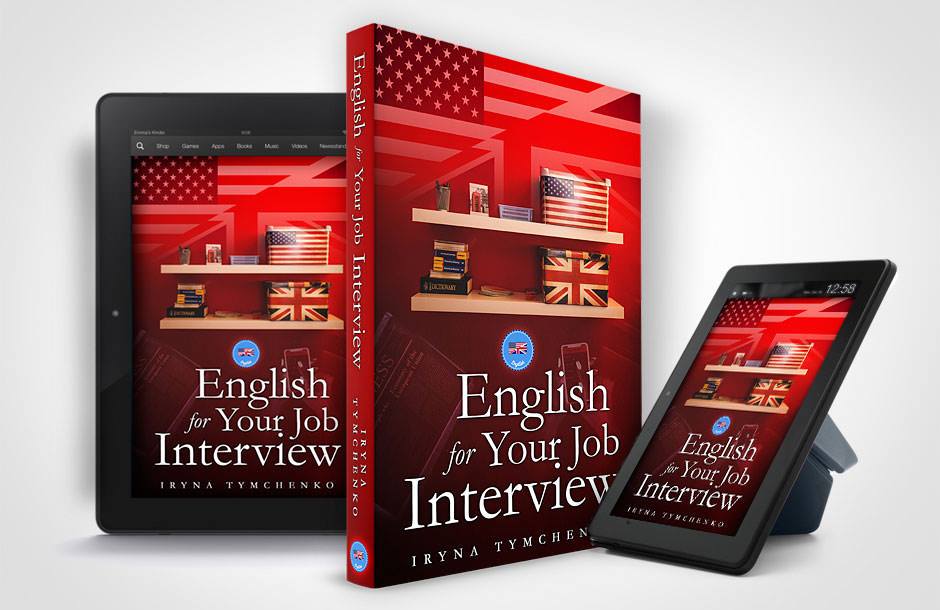
  • New: English for Your Job Interview

  • Follow me on Twitter

  • An Interview

  • Recent: Romantic English Phrasebook

  • Recent: Romantic Russian Phrase Book

  • Languages & Lifestyles

  • Archives

  • Goodreads

  • 101 Books

  • Writing

  • Blogs I Follow

Shelf Love

live mines and duds: the reading life