A Few Thoughts About Ethics in Writing

WriteEthics3

Interestingly, while ethics are huge in technical and academic writing, it is not given the same attention in the world of fiction writing. As an author who belongs to both groups, I have been watching the difference and wondering why? Could it be because scientists have to be more accurate about every word they write? Or maybe, the fiction writers are in any way more (or less) ethical than technical writers, so they don’t need to set up any rules of fiction writing ethics? 😉 I want to believe that both groups equally care about their readers and this difference is nothing more than a tradition, so nobody ever asks the question.

Ethics codes are present at the workplace: even if they aren’t always enforced, they still exist and we obey them… often mechanically, without thinking. Summing up a dozen of articles which I studied in search for an answer to my question, there are a few basic points to adhere to whenever you are writing a professional document:

  • don’t mislead;
  • don’t manipulate;
  • don’t stereotype; and
  • always check the facts.

Well, I did a thing which I may regret doing: I tried to apply these rules to fiction writing this morning… and found the reason of my writer’s block! I realized that everything fiction writers do is exactly the opposite of the four rules!

Unlike academic writing, which is all about sharing facts to feed the work of mind, fiction writing works with reader’s imagination and emotions; it’s principal idea is to mislead, manipulate, hide (or distort) facts of real life with the only purpose of creating stereotype universes in the readers’ minds and enticing them into reading! 

Does this mean that fiction writers are unethical, immoral, dishonest, improper, corrupt, unrighteous, unjust and… (could not think of more antonyms to the word “ethical”, sorry)?  Uh-huh, I kind of regret I took up the topic already!

To calm myself down, I decided to accept the following explanation: fiction writers have to break those rules of ethics. Like mathematicians, who sometimes look for a proof by contradiction, fiction writers need to show their readers a ‘different’ world, where rules are broken and norms are corrupted; we only have one rule to follow: we must expose the fake in the end. If writers did not do this, the world would never get to know “Alice in Wonderland”, “Winnie-the-Pooh” or Harry Potter books! These books mislead, manipulate, create unusual stereoptypes, and distort our reality, but they do this so awesomely well that no one can resist reading them again and again!

So, what is the answer? Is it ethical for fiction writers to ignore the ethics of academic writing? 😉 The question is still up!

Please, share your thoughts, I am very curious to know your opinions on this.

pooh1


My Protagonist of the Opposite Gender…

good-guy-vs-bad-iclipart

One of the hardest things to do as a writer is to write someone who is not yourself.” – George R.R. Martin

Writing a whole book from the name of a particular person is always a challenging task, but choosing a protagonist of an opposite gender is a real test for every author. I am doing this for the first time now, so I have been trying to adjust to the funny sensation of having a whole new personality – a male one – living inside me. 

The first confirmations of his presence started coming when I was thinking over the plot, and since then my protagonist has been growing through me like a plant that breaks through layers of soil to see the sunlight. Wow, what an interesting sensation! My first thought was that I was going crazy, but then I found similar feedback in the blogs of many authors. I completely agree with this comment by Cristina Hartmann: “I string words together and hope for the best. All characters, regardless of gender, have a part of me in them. No matter how seemingly different a character may be from me, they all have something in common with me. I put a little of myself in every character I write. In that sense, gender is irrelevant.”

When I write a character, I cannot go only with his/her general gender characteristics: I must imagine and draw a whole colorful picture of the character’s personality traits. Besides this, I may give a character an atypical quality: a male character may love planting roses, while a female may entertain herself by solving math problems in evenings. These unusual qualities may look like pesky imperfections at first, but they often lead my character toward some significant and exciting events, and eventually, the character is supposed to win the readers’ sympathy.

It is important to pick out some easily recognizable, but still quite unique character traits, because this helps the reader find connection between their mental image of my character and someone who they already know from real life: such character can keep the reader excited and interested to read the story to the very end. Secondly, the character’s imperfection should be charming; it is always a good idea to turn it into the character’s power at some point in the story (a stutter that suddenly helps them meet their love, or disarming shyness, or clumsy forgetfulness – anything).

It seems to me that the most difficult thing is to do this with a novel protagonist, especially if this is a person of an opposite gender, and even more – if he/she is the narrator of the story.

Kristen Houghton in her article “Writing As Your Opposite Gender Can Be Successful” wrote: “There are some things to remember when writing in your opposite gender voice. Understand that your character is unique and not a metaphor for the entire gender. The same is true when writing about ethnicity, race, religion, or social classes. You’re not generalizing about entire segments of society, you’re being specific about one character. As far as characters go, it pays to remember that not all women think and behave alike, and neither do all men… If my goal as a writer is to help my readers expand their life experiences through my writing, then my success will depend mainly upon my talent and technique, not on my character’s gender.”

My biggest goal in writing is to draw my characters so realistically that every reader would recognize someone they know in them. I believe that the only right way to do this is to write my characters completely from my own experiences.

I found a similar opinion in an article by Avory Faucette: “…the difficulty comes when describing an experience I haven’t had, which is more about others’ perception of me than about my own gender… I feel comfortable writing characters with similar hopes and aspirations and experiences to my own, and that makes it difficult to write someone who is not college educated, who is much younger or older, who is an immigrant, who is a person of color, etc.”

Sheri Fresonke Harper: “I think people in general have a blend of both feminine and masculine traits and interests… Often we pick up voice, mannerisms, and other characteristics of character from our experience with the world so that when we write from the perspective of another sex, we’ve seen the world through the eyes of people of that gender that have said the same thing, thought the same thing, acted the same way.”

This is true. Men and women aren’t that different, but they face quite different social roles and as so, their behavior is not the same.” Even the very fact of choosing to write the protagonist of the opposite gender shows that the author has made a commitment to explore a new social role and is willing to share that new knowledge with others.

It was a surprise to see that some authors find the task quite entertaining. I loved this comment by Eli Havoc: “It’s really easy. I was told once, by a female friend “we think just like you do, except we’re constantly worrying about how we look.” And that piece of advice had worked very well for me. I wrote a book written in first-person, once, with a female main character, and have gotten several comments from readers that go something like “Jenna’s character is so real! How did you write a high-school girl so believably?”

With all this being said, everything still seems to boil down to the author’s talent and brilliance in writing technique. In fact, the protagonists’s gender becomes nothing more than a tool which the writer decides to use in order to deliver the main idea of the book. Well, let us proceed to writing then! In the end, if I am a good writer, I should feel comfortable writing characters of either gender. Do you agree with me?

good_guy_protagonist2

“Cooking” Blog Headlines: My Signature Dish

signature dish 001

Correct me if I am wrong, but I believe that a smartly chosen headline can sell even an average article. Headline is the face of every text composition or document, no matter if it is long or short, creative or strictly logical, artistic or business-like. Every word of a headline works to represent the whole composition in search engines, in email, on social media, and can either attract the eye of the reader or do quite the opposite thing, which makes the task of crafting the headline crucially important.

Being a mother and wife with decades of experience in the kitchen, I can’t help but compare this process with cooking. Cooking is a skill, which – when properly used – can turn my daily work of processing food into a very satisfying, creative and surprisingly effective activity. Moreover, it gives me a chance to share my creative work with others… just like with blog writing! See for yourself: to cook a good dinner, we need to take care of four things-

  • to know what we are going to cook (a simple way to talk about goal setting);
  • to develop a method and a sequence of doing it;
  • to have necessary food ingredients and the kitchen equipment at hand; and
  • to decorate the final product and serve it properly, in order to get the best appreciation of the diners.

Well, this daily cooking scheme looks amazingly similar to blogging process, don’t you think? Cooking a blog article seems to follow the same methodology!

signature dish 01

I try to write for my blog quite regularly, so the task of giving names to the articles comes up a few times every week. The method I have developed is a kind of a recipe for cooking blog titles. These are the steps I take:

Step 1. Select 3-4 keywords

While I work on the article content, I write down 3-4 keywords, which describe the main idea of my article. These words usually become the basis for my working titleFor example, when I started writing this article, I picked four key phrases: blog article, create a title, craft a headline, headline writing howto (the idea to compare it with cooking process came to me later). This first step is very important, because it helps me set the direction of my thoughts, and then I check every passage of my article with the key phrases to see if the content corresponds with the working title.

Step 2. Answer the seven questions (below)

When the first draft of my article is ready and I have the working title, I can proceed directly to designing the final title. To do this, I ask myself a few questions-

  • Should I create a witty, inciting title or rather craft an informative headline*?

  • Who may want to read an article with this title/headline?

  • What words should I use or avoid in the title?
  • Is my title/headline catchy enough?
  • How long should my headline be?
  • Does it correspond to the content, structure, and style of my article?
  • Does my headline include the necessary keywords (is it satisfactory to both, my readers and the search robots)?

*There is some difference between the notions “title” and “headline”. To read more about it, go to page: http://blendmagazine.org/blog/2009/02/27/headlines-vs-titles/

Step 2 is the most creative one. I try to imagine my readers and, depending on how I visualize them, I come up with ideas of style, manner and length of my title. I won’t go into lengthy discussions here. You can simply apply these questions to an article that you are writing at the moment, and some ideas will flash in your mind right away.

Step 3. Personalize the title

To make my title attractive to many people, I need to enrich it with an emotional component. Some authors would express it by the phrase “make it sexy”, I would rather call it personalizing the title, which gives my readers a promise that, along with sharing the basic information, I will share a little about my personality. This makes me closer to the reader and simplifies the task of disclosing the subject of my article. Sometimes at this step I come up with an idea (like the one about comparing crafting of blog titles with the process of cooking), which makes me revise the whole article and sometimes rewrite it. But in most cases, revisions make the article better, so I don’t mind…

Step 4. Decorate and serve

At this step the article is finished and the title has been cooked. If I am satisfied with everything, I can proceed to publishing it in my blog. Quite often, I revise my articles days and weeks after they were published, and recently I found out that I am not the only one who does so. Honestly, I never expect the blog articles to be perfect: this is what blogging is about, isn’t it?

A blog article should be fresh and inventive in thought, but it does not have to be coursebook-precise or academically elaborate, it should simply catch the readers’ attention and provoke them to think. This is why I added Step 4 to my recipe. “Decorate and serve” means: make it visually attractive. Do not forget to develop a clear visual structure: break it up into easily identifiable parts, add numbering and bullets, or do whatever is necessary to make your article dish look edible and delicious.

Then, finally, add illustrations and serve.

signature dish 3

Here is a little bonus for you:

To read more on the topic, you are welcome to go to blendmagazine.org, where, inter alia, they provide a classification of article headline types. Enjoy:

7 Types of Headlines

http://blendmagazine.org/blog/2009/02/27/headlines-vs-titles/

1. The Know-it-All: these headlines offer practical advice or tips.

2. The Teacher: these headlines teach you something you didn’t already know.

3. The Gossip: these types of headlines stir up controversy, pique your interest, and often have you asking “and then what happened?”

4. The Instigator: these headlines make bold statements, which may or may not be true, but they make you want to click to find out.

5. The Nay-Sayer: these headlines convince you that what you don’t know will hurt you.

6. The Campaigner: these headlines provoke people who have similar problems or issues to click on the articles and connect with other like-minded people.

7. The Connector: these articles show the connection between two seemingly unrelated things.

Secrets of Blogging Success: Secrets? Seriously? Pah.

blogging_success_01

“So, you call this a secret? Seriously? Pah!”

I just read another portion of articles about achieving success in blogging, and my teacher mind has been trying to put all that information into a simple, clear and easy-to-remember system of rules. Many titles promise to reveal secrets of blogging success, but in fact, ther is nothing secret-ful about it: blogging is a skill – no more, no less sophisticated than any other skill that can be developed by thorough, repeating effort – and as so, there are no secrets behind it: only rules.

To be honest, I like setting up little rules for myself: they keep me well-organized and help me manage my time. Based on all the material that I have read about blogging, I have developed my own rules – or tasks, or… well, call them whatever you want, but certainly they are not secrets! Here they are:

1. Find a subject that works for you and your audience.

I find it quite logical to blog only about things that I know quite well and to share it with the people who are interested in the same topic(s). It goes without saying that I need to study the interests of my audience all the time if I want them to read the stuff I write.

blogging_success_02

2. Develop a voice and don’t lose it. 

This is a very creative task, but developing an author voice is a skill, too. One does not have to be gifted for blog writing; good understanding of what you are doing plus lots of untiring effort would be enough. Sounds quite promising, eh? 😉

blogging_success_04

“Develop your author voice and keep it.”

3. Blog away regularly, let your articles be short and precise.

Doing something regularly is a good rule in every undertaking. When we talk about blogging, it is crucial, especially when you have regularly returning readers and fans. If you stop blogging for a while, a part of your audience may leave you, and regaining their respect later will be really hard.

“Краткость сестра таланта” (brevity is the soul of wit), said a brilliant  Russian writer Anton Chehov in the19th century. Today, in the world of information, his words are gaining more and more value. People prefer short, schematic and visual posts… so I will stop here and go on to our next rule.

4. Communicate with your readers, and do it honestly.

I don’t think this item even needs any additional comments. Communication is the basis of the blogger’s life, it is the ultimate goal of blogging. Doing it with the most sincere intentions will help you to build that special bond with your readers, which makes you successfull and keeps your readers satifsied with your writing.

blogging_success_4

“Honestly? Alright, guys, I’ll be honest: I’m sleepy.”

5. Think like a scholar, share like a friend.

This is a good rule that just came to my mind this morning. By thinking like a scholar I mean being logical, consistent and precise in your writing. But sharing like a friend means that a blogger – no matter how educated and experienced she is – needs to find a lucid, intelligible style and friendly manner of writing.

blogging_success_03

6. In every blog post, tell your readers a story from life.

“I had never thought I would write a blog, until I met a fortune-teller who told me I would become a famous writer one day… This happened many years ago, the word “blog” did not exist then… but I could never get the prediction out of my head, and now… here I am, writing these words to you.” Did you get the idea of what I mean by suggesting to tell the readers a life story in every post? Let us go on then.

blogging_success_5

7. Illustrate everything!

Without the pictures of dogs this post would not attract even one tenth of the visitors to this site. Today, in the era of visual media, simple text is no longer attractive to anyone. All people have a common sympthom: a thirst for visual stimuli. So I have set this rule for myself: “every time you blog, do not forget to quench the thirst of your readers.”

This is it! Please, leave your suggestions and comments below. I would love to hear your feedback.

blogging_success_1

Breaking the Myths of Language Learning

ll1

Let us face it: nearly everyone has an item like “learn Spanish” or “do Rosetta Stone class” on their bucket list once in a while. When it comes to learning a foreign language, thousands of people around the world start procrastinating and quite often, they stubbornly stick to a popular myth in order to justify their inaction. I am sure you have heard each of the below statements before. Today we will see if they are credible or not.

Myth 1: “It’s a hard work, I can’t do it.”

When I was a high school graduate, I decided it was time for me to learn some adult life skills, so I took a 6-week contract as a farmer’s apprentice during my summer break (it was in 1982, in the USSR). I remember weeding onions from dawn to sunset along with a dozen of women-farmers, who could do the same job five times faster than me and were a way better adapted to doing it in the mid-summer heat. By the end of the very first day my back was aching like crazy and my hands were cut all over by the taut and elastic stems of weeds. That was a kind of job which I call a hard work.

Learning a foreign language is quite opposite to that. In fact, I wouldn’t call it a work at all. You only need to listen, read, watch and react to the obtained information. Because you don’t know many foreign words, your first reactions are simple: whenever you can understand a phrase, you try to respond with the help of hand movements, mimics, exclamations, gesturing, a bit of acting, etc. This simple activity is already the language learning, because when we communicate, this is exactly what we do: we send and receive portions of meaning to each other. This does not sound like a very hard work… and it isn’t.

ll2

Myth 2: “Learning is boring, it always is.”

The process of learning a foreign language can be boring only to those who-

a) like being bored; or

b) are not motivated for learning,

but if you are well-motivated, you will love it!

To make it easy and captivating, start by setting a very simple goal: to exchange any meaningful units of information with other people. Take a dozen of simple words (for example, take the words: I, you, like, need, work, have, this, room, book, class) and practice putting them together into various combinations. Again, be sure to help yourself with mimics, gestures and any other internationally recognized patterns of non-verbal communication. Then, take another dozen of words, and another. After an hour of such practice you will see that you have learned nearly a hundred of words and – most importantly – you can put them together into simple sentences, which means that you can communicate! Was this boring? I don’t think so!

Every learning process stops being boring when you start doing it right, because it begins sending you signals that you are on the right way. Nothing can motivate a learner better than these little signs of success.

Myth 3: “One must have a talent for languages, I don’t have any”

You will have to believe me on this: you are already talented enough. As a language teacher with 25+ years of experience, I can certify: you do NOT need to have any special gift to learn a  foreign language.

You have somehow mastered your native language, haven’t you? This means that your brain is completely developed and prepared to learn more of the language material, no matter if this is your native language or a foreign one.

All people living on our planet have similar anatomy: one head, two hemispheres of the brain to process information, a tongue to be able to speak, a pair of ears for listening and a pair of eyes for watching your partner in dialogue. This fact makes us equal when it comes to learning anything new. In the beginning, you won’t even need to think or torture your brain by remembering stuff: just listen to others, repeat what they say, and copy their intonation… like all toddlers do when they try to communicate.

Learning a foreign language has very much in common with learning your first, native language: if you were smart enough to master that first one, then you are good enough to master another language.

ll3

Myth 4: “To master a foreign language, I need a classroom.”

There are hundreds of life examples, which can break this myth within minutes. Quite often, people learn a new language without any classroom or coursebooks, simply by immersion in the so-called “language environment”. Our brain is a very flexible organ: it remains adaptable for study from early childhood to very old age; it can learn pretty well without coursebooks or grammar exercises. As soon as your brain receives an “imprint” of a new piece of information (for example, a new phrase which you hear someone say in a street), it imediately “sticks” the imprint to its meaning and puts this new element into a certain “memory cell”. No effort on your part is needed for this. Some classroom study can be helpful to those who need to be organized. Every language learning classroom aims to imitate real life situations to those who are separated from the language environment, but if you are lucky to have this environment around you every day, you can start speaking the new language much sooner than any classroom student.

In fact, our brain never stops to learn: you only need to open your mind, welcome the new knowledge and let it in, within the classroom or out of it.

Myth 5: “It is necessary to live in the country of the language.”

No, this isn’t a necessity at all. As we just mentioned above, your learning process can go  much faster if you live in the country of the language for a while, this is true, but living within the language environment is not a necessary condition for the language study.

Today, we are all lucky to live in the informational society. We have instant access to a whole virtual universe, called the Internet, at a single click of a finger. Why not use it as a medium for learning a foreign language?

You can use the Internet resources for reading, social networks for communication practice, video files for better memorizing, and occasional online sessions with a teacher to get your knowledge organized. Learning foreign languages becomes easier and easier every day now, so don’t waste your time deciding, just start it right away!

Myth 6: “Language learning requires lots of time, I don’t have it.”

The good news is: you don’t have to do hundreds of exercises or drill the rules of the new language for hours; it is enough to give it a few minutes a day, but regularly. Try to fill some gaps in your day-plan with listening practice, simple reading, or doing fun language exercises (a lot of which you can find on numerous Internet sites designed specifically for the language learners like you). Why not take a look into a mobile application while you are waiting for your car to be filled at the station? Or listen a passage or two of a simple story while jogging? Or find a random language lesson on Youtube when doing some housework? If you start with 10-15 minutes a day and turn it into a habit, you will soon enjoy the first results.

In the end, we always learn by ourselves, which means that no one but you are the master of your time and knowledge. If you can organize your time well enough, you will always find a few minutes for the language study. Those who feel that they need someone’s organizing hand, can find a teacher and take a few online classes to get the  general idea of the most effective ways to organize your learning process.

Myth 7: “I am too old for this; I will never learn.”

Growing older does not mean becoming incapable of learning new things. While there are some studies suggesting that children have an easier time learning a second language, no studies suggest there’s an age at which learning abilities disappear for good. So, let us put this myth to rest, too, and hink about another incentive instead: your age gives you some certain advantage in the form of life experience. You have been speaking your native language for quite some time, so your innate knowledge of its grammar and sounds will be helpful when trying to learn a new language from scratch.

Finally, let me tell you that I have been learning English for nearly half a century now, and of course, my English will never be perfect, because I have lived my life in the environment of anoher language, but this does not bother me much, because noone’s language is perfect! It really does not matter, how good, or fluent, or literate you are in a foreign language. The most important thing is to learn how to express your thoughts in it: the task which cannot be boring.

ll3

A Writer and His Travel…

travel_puertorico

Travel definitely affects me as a writer,” said Anthony Doerr, and he was far not the first one to admit this. Remember Jack Keruac’s “live, travel, adventure, bless, and don’t be sorry,” or E.B.White’s “travel is fatal to prejudice, bigotry, and narrow-mindedness… Broad, wholesome, charitable views of men and things cannot be acquired by vegetating in one little corner of the earth all one’s lifetime,” or E. Hemingway’s: “it is good to have an end to journey toward; but it is the journey that matters, in the end.” I could continue the list of quotes on dozens of pages, but it seems there is no need trying to prove this; everyone already agrees that travel broadens our horizons and boosts our creative energy.

Travel_Fmaui

At the same time, we only get to know the healing and inspiring effect of travel when we are smart enough to be able to analyze things that we see around us. Those who are unable to grow excited, admire, appreciate, or at least compare things to each other will never see the beauty of travel. It is like bringing romance with you to an island when you are looking to have a romantic adventure.

OLYMPUS DIGITAL CAMERA

My recent trips have been doing something wonderful to me. I come up with numerous ideas when I hit the road. Then, during months on returning home, I can’t stop thinking them over and writing. At times, they become overwhelming, but every creative person goes through this stage once in a while. I have an unbeatable drive to put it all on paper, so I have to say to my friends who call me out for coffee: “I’m Sorry. Not now,” I rub my temples and add, “not today… er- maybe some other day… later. Bye.”

It feels rather bad to postpone every other task besides writing, but again, I hear inside me: “To hell with little obligations and tasks, they can wait! To hell with unfinished books that long for some final editing. To hell with everything that is not writing!”

I glsnce at my calendar and my working diary. They seem to look back with reproach. “I will be with you… some day,” I say sternly, “but now, I’ve got to write, it’s important, you know.”

In the end, this is not my fault! It’s the travel…

OLYMPUS DIGITAL CAMERA

OLYMPUS DIGITAL CAMERA

Russian Loanwords in English

Recently, a few friends-writers from social networks asked me to share about the traces of Russian culture in the English language. I think this information might also be interesting to other people, not only linguists and writers.

aa_kokoshnik

Since very old times, the people, who inhabited vast territories of the present-day Russia, were known to have strong connections with other parts of the world. I am talking mainly about the ancient Kiev State and Great Novgorod. The exchange happened on different levels – in politics, trade, technology of the time, culture, and, of course, on the level of language. One of the first Russian words which came into the English language was ‘tapor-x’, which united a Russian and a Norwegian words; the word was found in handwritten manuscripts of 1031. Another English word, to talk, has the same root base with the Russian noun толк [tolk] (verb: толковать).

The words with common roots have been found in both, English and Russian languages since medieval times: sable (соболь), the old English meodu (м`д) and the more recent mead, meaning honey; the old English meolk (молоко), or milk; the old English ploz (плуг), meaning plough.

aa_troika

The pre-revolutionary Russia brought the following words into the English speaking world: мужик (muzhik), изба (izba), шуба (shuba), квас (kvass), морс (morse), щи (shchi), борщ (borshch), мед (mead), калач (calach), кисель (kissel), водка (vodka), наливка (nalivka), блины (bliny), телега (telega), печь (peach), махорка (makhorka), молитва (molitva), обедня (obednia), хоровод (khorovod), указ (ukase), опричнина (opritchnina), староста (starosta), боярин (boyar), царь (tsar), артель (artel), дача (dacha), самовар (samovar), тройка (troika), дрожки (droshky), погром (pogrom), степь (steppe), тундра (tundra), тайга (taiga), суслик (suslik), борзая (borzoi).

The 70-year period of the Soviet Union state gave birth to a whole bunch of new words, which acquired completely new meanings in the given environment: apparatchik (аппаратчик, an office worker), gulag (гулаг) Soviet-time prison/camp in Siberia. The decay of the Soviet Union enriched the English language with such words as: glasnost (гласность) and perestroika (перестройка).

The words sputnik (спутника) and cosmonaut (космонавт) also came into English through Russian.

Russian tourists and immigrants have contributed the words, associated with the Russian cuisine: blini (блины), borshch (борщ), koulibiaca (кулебяка), kasha (каша), smetana (сметана), kvass (квас), pirogi (пироги), shashlik /shishkobab/ (шашлык), vodka (водка), zakuska (закуска).

Russian suffix -ник (-nik) has become quite popular in English recently, you can find it in words kapustnik (The Daily Express), flopnik (Daily Herald), pufnik (Daily Mail), stayputnik (News Chronicle) (Эпштейн М. 2003).

Today, no English speaker is surprised to hear Russian words рубль (rouble) and копейка (kopek), (interestingly, the word rouble came into English through French), балалайка (balalaika) – Russian musical instrument; казачок (kazachok) – Ukrainian and Russian popular dance; борзая (borzoi) – a Russian dog kind; белуга (a fish) and белуха (a whale) have the same name in English: beluga; the Engish babushka – is a woman wearing a cloth over her head, tied under her chin; and of coure, Russian степь (steppe), тайгa (taiga) and тундрa (tundra), and many others.

aa_matryoshka

The rest of this article may be interesting to experts in Russian culture or to writers, whose work is devoted to the Russian culture:

1. The names, related to the state organs of power and ranks of the seate service people: czar (tzar ) ‘царь ’, voivodeвоеовда ’, knesкнязь ’, bojarбоярин ’, moujikмужик ’, cossackказак ’, opritchinaопритчина ’, strelscyстрелец ’, starostaстароста, ukaseуказ, kremlinкремль ’, sotniaсотня ’, Raskolnikраскольник ’.

2. Different measurements: verstверста, arshinаршин, poodпуд, sageneсажень ’, roubleрубль, copeckкопейка, chervonetsчервонец ’.

3. Names of items of clothes, foods or household items: shubaшуба ’,kvassквас, morseморс ’,koumissкумыс ’, shchiщи, borshchборщ ’,meadмед, calashкалач ’, shashlikшашлык ’, kisselкисель ’, vodkaводка, starkaстарка, nalivkaналивка, nastoikaнастойка, blinyблины, oladyiоладьи, okroshkaокрошка ’, troikaтройка, izbaизба, telegaтелега, peach‘печь, balalaikaбалалайка ’, bayanбаян ’, samovar самовар ’, tarantassтарантас ’, droshkiдрожки ’, kibitkaкибитка ’, makhorkaмахорка ’.

4. Natural characteristics and animals: steppeстепь, tundraтундра ’, taiga ‘тайга’, poliniaполыня ’, suslikсуслик ’,borzoiборзая ’.

5. Religious words: molitvaмолитва ’, obednjaобедня’ and a few names associated with unique Rusian culture: kokoshnikкокошник ’, khorovodхоровод ’, samovarсамовар’,obrokоброк ’,zolotnikзолотник ’, otrezokотрезок, vedroведро, matrioshkaматрешка ’.

There are many more words, of course, but those listed here are the most “recognizeable” by the English speakers.

AA_babushka

A Few Facts About the English Language in Russian


esl_communication_new_lifestyle_6

Несколько интересных фактов об английском языке, собранных с разных сайтов в Интернет. 

1. Английское слово «alphabet» происходит от названия первых двух букв греческого алфавита «alpha» и «beta».

2. В предложении «The quick brown fox jumps over the lazy dog» можно встретить каждую букву алфавита.

3. «I am» и «I do» — самые короткие предложения в английском языке с подлежащим и сказуемым.

4. В старые времена на протяжении определённого времени амперсэнд (символ “&”, в английском языке означающий союз “и”) был буквой английского алфавита.

5. Самые распространенные буквы в английском языке – это R, S, T, L, N, E. Реже всего используется буква Q.

6. Точка над буквой «i» в английском языке называется tittle (малейшая частица/капелька).

7. Самым длинным словом в английском языке, согласно Оксфордскому английскому словарю, является слово pneumonoultramicroscopicsilicovolcanoconiosis (обозначает болезнь легких, в слове 45 букв).

8. Самые длинные односложные слова в английском языке – это “screeched” (визгливо крикнуть) and “strengths” (сильные стороны).

9. «Almost» (почти) – самое длинное слово английского языка, в котором все буквы расположены в алфавитном порядке.

10. В английском языке есть слово с одной и той же гласной, которая повторяется 5 раз – «indivisibility» (единство, невозможность отделить).

11. “Four” (четыре) – единственное числительное в английском языке, количество букв которого соответствует обозначаемому числу.

12. Слово “set” (в значениях существительного и глагола) имеет больше значений, чем любое другое слово в английском языке.

13. Слова «racecar» (гоночная машина), «kayak» (каяк/байдарка) и «level» (уровень) являются полиндромами, то есть одинаково пишутся и читаются справа налево и слева направо.

14. Единственное слово в английском языке состоящее из 15 букв в котором буквы не повторяются “uncopyrightable” (не охраняемый авторским правом).

15. Ни одно слово в английском языке не рифмуется со словами «month», «orange», «silver» и «purple».

16. Буквосочетание “ough” в английском языке может читаться девятью различными способами. Следующее предложение содержит их все: “A rough-coated, dough-faced, thoughtful ploughman strode through the streets of Scarborough; after falling into a slough, he coughed and hiccoughed.”

17. Самое функциональное слово в английском языке – это «shit». (О способах его использования подробно можно прочитать здесь http://www.funfacts.com.au/the-most-functional-word-in-the-english-language/ )

18. В английском языке больше всего слов (около 800 000) и самые богатые синонимические ряды. Американский президент Бенджамин Франклин собрал более 200 синонимов слова «пьяный» (англ. drunk), включая такие «шедевры» как «cherry-merry», «nimptopsical» и «soaked».

19. Самая сложная скороговорка в английском языке – это “The sixth sick sheik’s sixth sheep’s sick”.

20. Согласно закону штата Иллиной (Illinois), в штате запрещено говорить по-английски – официальным языком здесь принято считать американский.

21. «God be with ye»- полная версия слова «goodbye».

22. Древнейшее слово в английском языке – town (городишко), означает, как правило, городок с населением не более 5 тысяч человек

23. Со словами month, orange, silver, purple, английские поэты не могут найти рифму.

24. В одной верхней строке клавиатуры можно набрать английское слово «typewriter».

25. Когда-то слово «pants» считалось ругательным в Англии, теперь его используют на каждом шагу.

i-love-en


Gerunds Are Quite Friendly, They Only Have a Scary Name

In fact, gerunds are just the -ing forms of verbs.

gerund

Герундий – страшное слово, которым пугали нас школьные англичанки в средних классах, на самом деле совсем не страшен и не сложен. Это просто-напросто общий термин для глаголов, к которым приставили окончание -ing.

Read – reading; hike – hiking; see – seeing и т.д.

Зачем его приставили? Для того, чтобы создать значение процесса или длящегося действия. В русском языке, произнося слово “чтение”, мы подразумеваем определённый род занятий, навык (“чтение – полезное умение”) или процесс, протекающий во времени (“старайтесь не отвлекаться во время чтения” = “старайтесь не отвлекаться, когда читаете“). Англичане делают то же самое, прибавляя к глаголам окончание -ing. Дальше – примеры использования герундия в английском языке.

В этих примерах герундий использован в качестве подлежащих и дополнений, а по-русски мы скажем то же самое так, как привычнее всего нам:

Skiing is my favorite sport.  Катание (сущ.) на лыжах – мой любимый спорт.

Seeing is believing.   Увидеть (гл.) – значит поверить (гл.).

Глаголы с окончанием -ing нередко стоят после предлога и придают всему предложению значение процесса, их можно переводить на русский язык либо существительным, либо глаголом:

Thanks for helping my children. (Спасибо за помощь моим детям или: Спасибо, что помогли моим детям)

The job consists of typing, filing, and answering the phone. (Работа состоит в наборе текста, составлении файлов, приёме звонков)

Чаще всего герундий встречается в сочетании определёнными глаголами (так сложилось по традиции).

The children enjoyed watching the parade.

Ms. Terrell avoided paying her taxes until it was too late.

Roland is afraid of making mistakes. (обратите внимание: making mistakes – тоже традиционно используемое цельное словосочетание)

Sandy is considering leaving New York.  (а тут вообще два окончания -ing подряд! Это потому, что в слове considering это окончание является одним из признаков продолженного времени (present continuous: is considering), а вот слово leaving – это уже герундий Если уж совсем переводить его на русский лад, то можно задать к слову “leaving” вопрос: “что делание?”. Сэнди продумывает (что? Что делание?) отъезд из Нью Йорка. Вот и всё, что нужно знать, чтобы не смущаться при виде герундия.  

Ниже – небольшой список глаголов, после которых традиционно следует герундий. Не стоит зазубривать их целым списком. Просто постройте с ними словосочетания и предложения (“He wanted to avoid meeting Jane, so he took a different way to school that morning”), и многие из этих слов со временем запомнятся сами собой:

admit

begin

discuss

hate

love

practice

regret

stop

advise

can’t help

dislike

hesitate

mention

prefer

remember

suggest

anticipate

complete

enjoy

imagine

mind

quit

resent

threaten

appreciate

consider

finish

intend

miss

recall

resist

tolerate

attempt

delay

forget

keep

neglect

recollect

risk

try

avoid

deny

go

like

postpone

recommend

start

understand

What Distinguishes a Successful Blogger in 2017?

learning-distance-1

As I have been learning how to blog, I never miss publications on the newest tendencies in the world of blogging. It goes without saying that every beginner must find a niche and identify a group of ideal readers for their blog, but then… what else? According to my research of publications authored by well-recognized bloggers, the following features will become a must for every successful blogger in 2017:

  • compelling content that adds value to readers;
  • preferably short articles and posts;
  • attractive illustrations, at least one for each post (I have no doubt that in 2017, visualization will become No1 factor of success for bloggers);
  • simplicity and preciseness of all information;
  • an easily identified, unique feel (or a unique author’s voice) of the blog to attract repeated visitors;
  • clearly displayed personality of the blogger;
  • positive general mood of the posts;
  • rational use of social media, (the bloggers should not focus too much on them, they should rather focus on writing);
  • ongoing research related to the main blog topics;
  • regularly appearing video and audio content.

Please, add your ideas in the comments below if you can think of more items. Thank you! Wishing you all the best with your blog!

  • Follow Share love. Educate. Inspire. on WordPress.com
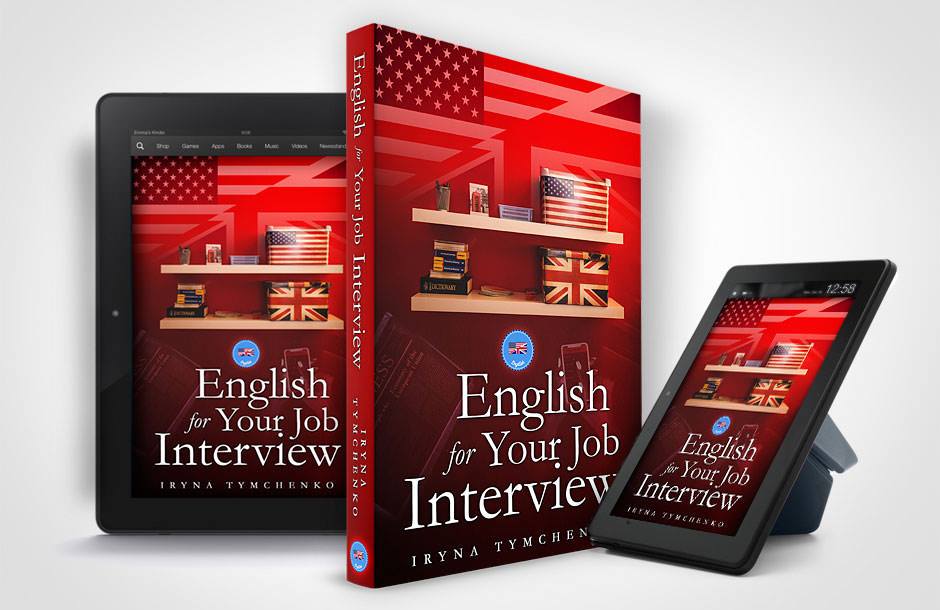
  • New: English for Your Job Interview

  • Follow me on Twitter

  • An Interview

  • Recent: Romantic English Phrasebook

  • Recent: Romantic Russian Phrase Book

  • Languages & Lifestyles

  • Archives

  • Goodreads

  • 101 Books

  • Writing

  • Blogs I Follow

Shelf Love

live mines and duds: the reading life