Secrets of Blogging Success: Secrets? Seriously? Pah.

blogging_success_01

“So, you call this a secret? Seriously? Pah!”

I just read another portion of articles about achieving success in blogging, and my teacher mind has been trying to put all that information into a simple, clear and easy-to-remember system of rules. Many titles promise to reveal secrets of blogging success, but in fact, ther is nothing secret-ful about it: blogging is a skill – no more, no less sophisticated than any other skill that can be developed by thorough, repeating effort – and as so, there are no secrets behind it: only rules.

To be honest, I like setting up little rules for myself: they keep me well-organized and help me manage my time. Based on all the material that I have read about blogging, I have developed my own rules – or tasks, or… well, call them whatever you want, but certainly they are not secrets! Here they are:

1. Find a subject that works for you and your audience.

I find it quite logical to blog only about things that I know quite well and to share it with the people who are interested in the same topic(s). It goes without saying that I need to study the interests of my audience all the time if I want them to read the stuff I write.

blogging_success_02

2. Develop a voice and don’t lose it. 

This is a very creative task, but developing an author voice is a skill, too. One does not have to be gifted for blog writing; good understanding of what you are doing plus lots of untiring effort would be enough. Sounds quite promising, eh? 😉

blogging_success_04

“Develop your author voice and keep it.”

3. Blog away regularly, let your articles be short and precise.

Doing something regularly is a good rule in every undertaking. When we talk about blogging, it is crucial, especially when you have regularly returning readers and fans. If you stop blogging for a while, a part of your audience may leave you, and regaining their respect later will be really hard.

“Краткость сестра таланта” (brevity is the soul of wit), said a brilliant  Russian writer Anton Chehov in the19th century. Today, in the world of information, his words are gaining more and more value. People prefer short, schematic and visual posts… so I will stop here and go on to our next rule.

4. Communicate with your readers, and do it honestly.

I don’t think this item even needs any additional comments. Communication is the basis of the blogger’s life, it is the ultimate goal of blogging. Doing it with the most sincere intentions will help you to build that special bond with your readers, which makes you successfull and keeps your readers satifsied with your writing.

blogging_success_4

“Honestly? Alright, guys, I’ll be honest: I’m sleepy.”

5. Think like a scholar, share like a friend.

This is a good rule that just came to my mind this morning. By thinking like a scholar I mean being logical, consistent and precise in your writing. But sharing like a friend means that a blogger – no matter how educated and experienced she is – needs to find a lucid, intelligible style and friendly manner of writing.

blogging_success_03

6. In every blog post, tell your readers a story from life.

“I had never thought I would write a blog, until I met a fortune-teller who told me I would become a famous writer one day… This happened many years ago, the word “blog” did not exist then… but I could never get the prediction out of my head, and now… here I am, writing these words to you.” Did you get the idea of what I mean by suggesting to tell the readers a life story in every post? Let us go on then.

blogging_success_5

7. Illustrate everything!

Without the pictures of dogs this post would not attract even one tenth of the visitors to this site. Today, in the era of visual media, simple text is no longer attractive to anyone. All people have a common sympthom: a thirst for visual stimuli. So I have set this rule for myself: “every time you blog, do not forget to quench the thirst of your readers.”

This is it! Please, leave your suggestions and comments below. I would love to hear your feedback.

blogging_success_1

English: the Lingua Franca of the World

lingua franca 01

Historically, the term lingua franca was used to identify a bridge language, representing a mixture of Italian with French, Greek, Arabic, and Spanish, formerly used in the eastern Mediterranean. Today, the term has acquired a much wider meaning: lingua franca is a common language used as a means of global communication. We, people, have always needed it, but today, when the world’s population grows incredibly quickly along with the boosting development of communication technologies, the need for a language of global interaction has become crucial for our survival… and interestingly, it appeared by itself, without waiting for our global negotiation, memorandum signing, or approval. People have chosen English to be their “universal” language, and today this fact is accepted by everybody.

Currently, more than 350 millions of lucky guys around the world speak English as their native language, plus 430 million people are using it as the second language, and it is not difficult to find English speakers practically in all corners of the world. More and more frequently now, English is called the international language of business, science, politics, trade, academic world, journalism, travel, Internet, global press, and its influence continues to increase right at the moment, while I am writing these words.

lingua franca 1

(These figures are of the year 2014)

But why is it English? It is not the most spoken language in the world. What makes it our lingua franca today?

Though the number of its speakers soars up with acceleration, it is native to 350 million, while there are 500 million of Spanish speakers, nearly 500 million of Hindustani (Hindi/Urdu) natives and 900 million of Mandarin Chinese speakers in the world. The main explanation of the reason why English has gained the status of the world’s lingua franca lies in its linguistic specificity. English is widely considered as a “simple” language which is relatively easy to pick up. It has no noun genders, no complicated morphology, no tone system, it is written in the Roman alphabet which is pretty good at accurately mapping sounds to symbols, and majority of the English learners agree that, due to its mathematically logical structure, it is relatively easy to build understandable phrases in it. Besides this, the prevalence of English-language movies, television programs, and Internet sites makes the language quite accessible to practice.

At the same time, English has an extensive vocabulary and a highly inconsistent spelling system, which can turn one’s learning process into nightmare. It also has hundreds of irregular verbs, some problematic sounds such as “th”, and a large inventory of vowels which can make it difficult for a foreigner to understand the native speakers of English. Still, representatives of many nations would rather prefer to take time and learn English rather than take up Mandarin, Hindustan, or Arabic, for example.

There is one more explanation of the role of English: a historical one. Generations ago, the United Kingdom became the first industrialized nation; the boosting development of technologies started from there and since then, the English speaking nations have pioneered in technologies and science. They managed to colonize the rest of the developing world far faster than other European countries. At some point, the British Empire covered a quarter of the globe at its largest, including North America, the Caribbean, Australia, New Zealand, much of West and Southern Africa, South Asia, and parts of South-East Asia. The UK set up English-speaking systems of government, industry, trade and business, which established English as the language of global power in the industrial era. In the 20th century we could see the transfer of power from one English-speaking expansionist to another: the USA’s cultural, economic, political, and military domination has also encouraged the process of global recognition of English as the most important and influential global language. Today, when the world has entered the informational stage of evolution, English has officially become the language of IT, meaning that its status of the global lingua franca has been reconfirmed, and it is unlikely to change any time soon.

lingua franca 02

Russian Loanwords in English

Recently, a few friends-writers from social networks asked me to share about the traces of Russian culture in the English language. I think this information might also be interesting to other people, not only linguists and writers.

aa_kokoshnik

Since very old times, the people, who inhabited vast territories of the present-day Russia, were known to have strong connections with other parts of the world. I am talking mainly about the ancient Kiev State and Great Novgorod. The exchange happened on different levels – in politics, trade, technology of the time, culture, and, of course, on the level of language. One of the first Russian words which came into the English language was ‘tapor-x’, which united a Russian and a Norwegian words; the word was found in handwritten manuscripts of 1031. Another English word, to talk, has the same root base with the Russian noun толк [tolk] (verb: толковать).

The words with common roots have been found in both, English and Russian languages since medieval times: sable (соболь), the old English meodu (м`д) and the more recent mead, meaning honey; the old English meolk (молоко), or milk; the old English ploz (плуг), meaning plough.

aa_troika

The pre-revolutionary Russia brought the following words into the English speaking world: мужик (muzhik), изба (izba), шуба (shuba), квас (kvass), морс (morse), щи (shchi), борщ (borshch), мед (mead), калач (calach), кисель (kissel), водка (vodka), наливка (nalivka), блины (bliny), телега (telega), печь (peach), махорка (makhorka), молитва (molitva), обедня (obednia), хоровод (khorovod), указ (ukase), опричнина (opritchnina), староста (starosta), боярин (boyar), царь (tsar), артель (artel), дача (dacha), самовар (samovar), тройка (troika), дрожки (droshky), погром (pogrom), степь (steppe), тундра (tundra), тайга (taiga), суслик (suslik), борзая (borzoi).

The 70-year period of the Soviet Union state gave birth to a whole bunch of new words, which acquired completely new meanings in the given environment: apparatchik (аппаратчик, an office worker), gulag (гулаг) Soviet-time prison/camp in Siberia. The decay of the Soviet Union enriched the English language with such words as: glasnost (гласность) and perestroika (перестройка).

The words sputnik (спутника) and cosmonaut (космонавт) also came into English through Russian.

Russian tourists and immigrants have contributed the words, associated with the Russian cuisine: blini (блины), borshch (борщ), koulibiaca (кулебяка), kasha (каша), smetana (сметана), kvass (квас), pirogi (пироги), shashlik /shishkobab/ (шашлык), vodka (водка), zakuska (закуска).

Russian suffix -ник (-nik) has become quite popular in English recently, you can find it in words kapustnik (The Daily Express), flopnik (Daily Herald), pufnik (Daily Mail), stayputnik (News Chronicle) (Эпштейн М. 2003).

Today, no English speaker is surprised to hear Russian words рубль (rouble) and копейка (kopek), (interestingly, the word rouble came into English through French), балалайка (balalaika) – Russian musical instrument; казачок (kazachok) – Ukrainian and Russian popular dance; борзая (borzoi) – a Russian dog kind; белуга (a fish) and белуха (a whale) have the same name in English: beluga; the Engish babushka – is a woman wearing a cloth over her head, tied under her chin; and of coure, Russian степь (steppe), тайгa (taiga) and тундрa (tundra), and many others.

aa_matryoshka

The rest of this article may be interesting to experts in Russian culture or to writers, whose work is devoted to the Russian culture:

1. The names, related to the state organs of power and ranks of the seate service people: czar (tzar ) ‘царь ’, voivodeвоеовда ’, knesкнязь ’, bojarбоярин ’, moujikмужик ’, cossackказак ’, opritchinaопритчина ’, strelscyстрелец ’, starostaстароста, ukaseуказ, kremlinкремль ’, sotniaсотня ’, Raskolnikраскольник ’.

2. Different measurements: verstверста, arshinаршин, poodпуд, sageneсажень ’, roubleрубль, copeckкопейка, chervonetsчервонец ’.

3. Names of items of clothes, foods or household items: shubaшуба ’,kvassквас, morseморс ’,koumissкумыс ’, shchiщи, borshchборщ ’,meadмед, calashкалач ’, shashlikшашлык ’, kisselкисель ’, vodkaводка, starkaстарка, nalivkaналивка, nastoikaнастойка, blinyблины, oladyiоладьи, okroshkaокрошка ’, troikaтройка, izbaизба, telegaтелега, peach‘печь, balalaikaбалалайка ’, bayanбаян ’, samovar самовар ’, tarantassтарантас ’, droshkiдрожки ’, kibitkaкибитка ’, makhorkaмахорка ’.

4. Natural characteristics and animals: steppeстепь, tundraтундра ’, taiga ‘тайга’, poliniaполыня ’, suslikсуслик ’,borzoiборзая ’.

5. Religious words: molitvaмолитва ’, obednjaобедня’ and a few names associated with unique Rusian culture: kokoshnikкокошник ’, khorovodхоровод ’, samovarсамовар’,obrokоброк ’,zolotnikзолотник ’, otrezokотрезок, vedroведро, matrioshkaматрешка ’.

There are many more words, of course, but those listed here are the most “recognizeable” by the English speakers.

AA_babushka

Gerunds Are Quite Friendly, They Only Have a Scary Name

In fact, gerunds are just the -ing forms of verbs.

gerund

Герундий – страшное слово, которым пугали нас школьные англичанки в средних классах, на самом деле совсем не страшен и не сложен. Это просто-напросто общий термин для глаголов, к которым приставили окончание -ing.

Read – reading; hike – hiking; see – seeing и т.д.

Зачем его приставили? Для того, чтобы создать значение процесса или длящегося действия. В русском языке, произнося слово “чтение”, мы подразумеваем определённый род занятий, навык (“чтение – полезное умение”) или процесс, протекающий во времени (“старайтесь не отвлекаться во время чтения” = “старайтесь не отвлекаться, когда читаете“). Англичане делают то же самое, прибавляя к глаголам окончание -ing. Дальше – примеры использования герундия в английском языке.

В этих примерах герундий использован в качестве подлежащих и дополнений, а по-русски мы скажем то же самое так, как привычнее всего нам:

Skiing is my favorite sport.  Катание (сущ.) на лыжах – мой любимый спорт.

Seeing is believing.   Увидеть (гл.) – значит поверить (гл.).

Глаголы с окончанием -ing нередко стоят после предлога и придают всему предложению значение процесса, их можно переводить на русский язык либо существительным, либо глаголом:

Thanks for helping my children. (Спасибо за помощь моим детям или: Спасибо, что помогли моим детям)

The job consists of typing, filing, and answering the phone. (Работа состоит в наборе текста, составлении файлов, приёме звонков)

Чаще всего герундий встречается в сочетании определёнными глаголами (так сложилось по традиции).

The children enjoyed watching the parade.

Ms. Terrell avoided paying her taxes until it was too late.

Roland is afraid of making mistakes. (обратите внимание: making mistakes – тоже традиционно используемое цельное словосочетание)

Sandy is considering leaving New York.  (а тут вообще два окончания -ing подряд! Это потому, что в слове considering это окончание является одним из признаков продолженного времени (present continuous: is considering), а вот слово leaving – это уже герундий Если уж совсем переводить его на русский лад, то можно задать к слову “leaving” вопрос: “что делание?”. Сэнди продумывает (что? Что делание?) отъезд из Нью Йорка. Вот и всё, что нужно знать, чтобы не смущаться при виде герундия.  

Ниже – небольшой список глаголов, после которых традиционно следует герундий. Не стоит зазубривать их целым списком. Просто постройте с ними словосочетания и предложения (“He wanted to avoid meeting Jane, so he took a different way to school that morning”), и многие из этих слов со временем запомнятся сами собой:

admit

begin

discuss

hate

love

practice

regret

stop

advise

can’t help

dislike

hesitate

mention

prefer

remember

suggest

anticipate

complete

enjoy

imagine

mind

quit

resent

threaten

appreciate

consider

finish

intend

miss

recall

resist

tolerate

attempt

delay

forget

keep

neglect

recollect

risk

try

avoid

deny

go

like

postpone

recommend

start

understand

The Faster Millennials Breed, the Less the Book Authors Eat…

reading-2

There is an interesting paradox: in the new millennium, again, like in good old days, reading has become a privilege of a few. Centuries ago, the main obstacle to reading was mass illiteracy, so authors knew that their writing could only be appreciated by a thin social group of well educated and relatively wealthy. Today, when everyone can be a potential reader, the authors are facing a problem again: the short era of mass, unlimited reading is over: the millennial generation lacks time. By a trick of fate, the only shortcoming of reading – the fact that it is quite time-consuming – seems to negate all of its precious powers, because in our crazy world time has become the most valuable asset of all.

A good novel takes days (sometimes weeks) to read, while a good movie is visual and fast: a movie “retells” you the longest book in as little as an hour or two, so books can no longer compete with such means of information transfer as television, movies, computer games, or the Internet, which altogether have turned the process of reading into nothing more than a careless time killer. With all the technologies available today, I am surprised that books still remain in vogue at all.

All in all, the authors of new books have to face it: the niche is rapidly thinning. Within a decade or so, reading is going to turn into a special treat, or hobby, appreciated only by the extravagant few, like listening to vinyl records or taking pictures on a film camera.

What does it mean to authors then? I guess two thirds of all authors will be kicked out of business in the nearest few years, while the quality standards for writing will soar up higher and higher.

An opponent might suggest that reading is good for our mind, it develops emotions and feeds our soul, it is undeniably healthier than anything else the technologies can offer… Yes, of course, this is true. Still, the tendency is quite clear: in the 21-st century, reading has become an unaffordable luxury, and the process is only beginning to develop.

With all this in mind, every new author should be realistic and not put all eggs in one basket: making a living by just writing books is hardly a good idea today. Even the most captivating novel may fail to attract the desired number of readers, simply because of the fact: most of them realize that they will never have time to read it.

Writing Fiction Is an Art

writing2

To me, writing fiction has always been equivalent to creating artwork, because it is the art of influencing the personality of your reader, and reading fiction is nothing else but an acquaintance with a new world – the world as it is seen by the author.

Secondly, writing fiction means sharing your vision with others, and sharing is also an art. Like every other art, fiction writing is not supposed to share information – let us leave this to press, television and journalists – it is supposed to provoke emotional reactions, to make the reader feel and suffer.

Gustav Flaubert wrote that the art of writing is the art of discovering what you believe. To me, it is also the art of sharing your vision so masterfully that others could see it your way.

Fiction writing is also the art of working with other people’s imagination, which is a lot more difficult than just working with someone’s logics. To master the art, a good writer must be a little of everything: an artist, a linguist, a psychologist, a philosoper, and just an inspired individual who sees the unique sides of this world and can convey his vision to others.

Blogging Is an Introvert’s Torture

Female student writing at desk

Blogging is a real torture for me as an incurable introvert.

(Here comes a 15-minute break sipping cold coffee and blankly looking at the line above.)

No. Blogging is not my strong side.

(5 more minutes of heavy thinking here.)

It feels like talking to a wall when you have to share your thoughts to a blog instead of chatting with a real audience. Having spent decades working with large and small groups of people every day, I am used to seeing people’s faces and receiving immediate reaction to everything I say. But blogging makes me feel like I have a sleeping patch on my eyes and a helmet over my ears. I must confess: to me, there is nothing cool about sharing my thoughts to invisible audiences. I guess, I am a bit old-fashioned here.

Writing Can Be Taught

Today, I have been reading “Plot and Structure” by J.S.Bell again. In introduction, the author says that he had wasted decades of his time not writing because since childhood he had been told that to be a writer one must be born with it (the gift of writing). He had also been told that writing couldn’t be taught. J.S.Bell writes,”I started to believe it. I figured I didn’t have it and never would. So I did other stuff. Like go to law school. Like join a law firm. Like give up my dream. But the itch to write would not go away. At age thirty-four, I read an interview with a lawyer who’d had a novel published. And what he said hit me in my lengthy briefs. He said he’d had an accident and was almost killed. In the hospital, given a second chance at life, he decided the one thing he wanted was to be a writer. And he would write and write, even if he never got published because that was what he wanted. Well, I wanted it, too.”

Al this sounds sadly familiar to me, and I am sure there are thousands of other people around the world facing the same fact: they never tried writing because they did not believe in themselves, and because everybody around kept convincing them that writing is a wrong way to choose. As well as music, and arts, and any other “impractical” occupations, by the way.

Still, those who are strong enough to overcome their shyness and finally do start writing, as well as those who are quite experienced – all need to learn. My strong belief is that one CAN learn how to write, moreover, it is as complicated as every other intellectual occupation, so it MUST be learned. It is never late to learn and there is never enough of learning. To me, a picture like the one below, is not an evidence of a writer’s failure. It is the evidence of a learning process, which is awesome.

learning_writer

Choosing a Title For Your Book

A few thoughts on choosing a title for your book

As a debut fiction writer, who has spent decades teaching science methodology and writing solely in the genre of science, I have been following writers’ discussions about creative writing lately with unspoiled curiosity of a child. There are dozens of topics in the world of fiction writing which deserve most careful attention, and one of the first among them is giving your book the right name. I find it as important as having a photogenic face for a photo model. The title is the face of your book, it can either help you attract potential readers or scare them away and make them run, mumbling under their nose, “if this is the cover, I’d better not look inside!”

BookTitle

No matter what genre your book belongs to, there are a few universal things which every author should keep in mind (and here the logic of a researcher speaks loudly in me): the title is an inseparable part of the book, which means it must

1) grow out of it (be consistent with it, if you like);

2) reflect the author’s principal message; and

3) identify the genre of the book.

Within a genre, there may be other rules and commonly accepted traditions, but the three above items are the identifying, basic principles for all books. If you call a romance novel “A Midnight Death In A Tunnel”, or call a detective story “My Sweet Emma”, your readers (not to mention the book store assistants and librarians) will be misled.

The title is supposed to set a tone for your book and create a certain expectation in the reader’s mind. A strong title is the book opener, which should entice the reader to look inside.

What is the trick of selecting the right name for the book then? I believe, every writer can help himself with the task by doing the following things.

First, you need to identify the genre of your book, because depending on it, you can set the right tone, or impression, or expectation. It is always a good exercise to put it down and take a good look at it. As an example, look a this: a romance novel “Rick, Deer Hunter” Does it look right to you? To me, it doen not. If my book’s message is to offer people more love and tenderness, I would rather leave this name to writers of adventure books.

To get the taste of commonly used names for your genre, look up a dozen of popular books in the same genre as yours. You’ll need to develop a feel for the most typical names in your genre. As soon as you do this, good names will start popping up in your mind right away.

Another good exercise to do is to write a list of keywords which characterize your book. They may be nouns, verbs or agjectives; they may be short phrases. They should not be the most comonly used words or names. The main quality of a keyword is to characterize your principal idea, the mission of your book, the reason why you spent months of your life writing it.

You may also make up lists of words which describe your main characters, or an important location, or a sensation caused by a scene. Take visual words or words that bring up emotions. You may find a single word whish would perfectly fit as a title, or select a phrase (preferably easy to pronounce and remember); after surveying your lists thoroughly, pick out the words which seem to fit your content the best. Compare your resulting list of titles to those of the popular books in your genre. I hope these exercises will help you select a good name for your book.

There are a few more things which I understood about book titles both, as a reader and as an author. First of all, I realized that a good fiction title always has a touch of emotional tension in it. Compare, for example, these titles:

Bill Murray’s Life (quite neurtal and plain: everyone’s got a life), and

Bill Murray’s Return (provides expectation of an unusual story), and

Bill Murray’s Rise and Fall (gives expectation of a fundemental life story, probably with a sad end), and

Bill Murray’s Revenge (creates expectation of an emotional story with elements of detective).

Comparing book titles is a very good exercise, because it reveals for you how powerful the name of a book may be.

At the same time, the title should be short, simple to pronounce and easy to remember. It can contain a one-word description of a story in action, like- The Intervention, A Breakthrough, or Reunion. It may contain a key word and one more descriptive word (name) to clarify the general mood of the book: My Passionate Diaries, or Darkness At Noon, or The Age Of Innocence. The title may also contain a geographical name, but then, for sure, it should create an image (or a sensation) in a reader’s mind, like these names: The Maltese Falcon, Appointment in Samarra, An American Tragedy. Well, of course, there is an endless variety of names to choose, which only makes the choice more difficult. Still, every writer should keep in mind a few basic things

Whenever I need to give a name to a work of writing, I prepare a little checklist of questiond for myself, no matter wht genre my work belongs to. Here is the list:

– Is the title consistent with the contents of my work (or at least with a part of it)?

– Does the title create an expectation of a particular genre in which the work is written?

– Does the title sound (look) clear and simple, is it easy to remember?

– Can this title entice a reader to open the book?

– Is there at least one special word in my title that can attract my particular readers’ audience?

If I answer all five questions right away and am satisfied, this means I have selected a good title.

Writing In the First Person

I just read a nice article by Mia Botha The Pros and Cons of Writing in First Person at Writers Write. Mia feels there is no right or wrong in this question, but there are pros and cons, which depend on the writer.

I agree: full responsibility for deciding how to write the book lies on the writer.

Ernst_writing

On the one hand, it gives you as an author unlimited access to the character’s thoughts and feelings, but it also limits you in describing thoughts and feelings of other characters. Writing in the first person sets out the main character, opposes him/her to everyone else. It is up to the author to decide whether to allow this to happen or not.

In her article Mia notes, and this is a great observation, that writing in first person gives the author a deeper insight into the main characters’ thinking process, but at the same time, it limits the writer in a few other things: “your character can’t be everywhere and he can’t hear everything” and “your character shouldn’t be alone for too long,” and also it is necessary to “be careful of starting every sentence with I.”

I agree with every word of the article, I just want to add a few more. It must be the scientist inside me that is making me write this now, but- well, here is what I think.

As every other element of fiction writing, the choice of the story’s narrator must be reasoned. The one who tells the story shows the reader his/her world in a unique, individual way.

When an author finds a bright individual who can see the world in a very attractive (unusual) manner, plus if there is an event which causes a change in this person’s life, then it makes perfect sense to tell the story in the first person (remember Holden Caulfield from The Catcher In The Rye by J.D. Salinger?). in such case, the whole book aims to show development of one personality; all the world around this person exists to make these changes possible. Every scene takes place in this person’s mind, and the author must see with this character’s eyes as if they were his own. This is a very hard task, unless the author is telling a story from his own life.

If a story has many solutions and it looks like it makes full sense to show how different people (creatures) see the same chain of events, then the author sets a different goal: to show the world in its development, where people are just observers of its dynamics. Their visions are different, their lives move on, but the world remains unchanged. In such stories, the protagonist is still in focus of attention; his vision seems the most important, but the author would rather write in third person, because other characters’ opinions matter, too. The protagonist cannot be opposed to them, because he is on their side, he is one of them, and all of them are struggling against the antagonist’s power (take Neil Gaiman’s The American Gods, for example).

Well, this is the way I see it. The point is, there must be a reason for everything. Once you have decided to write in the first of in the third person, this is dictated by the core idea of your book, by the book’s mission.

  • Follow Share love. Educate. Inspire. on WordPress.com
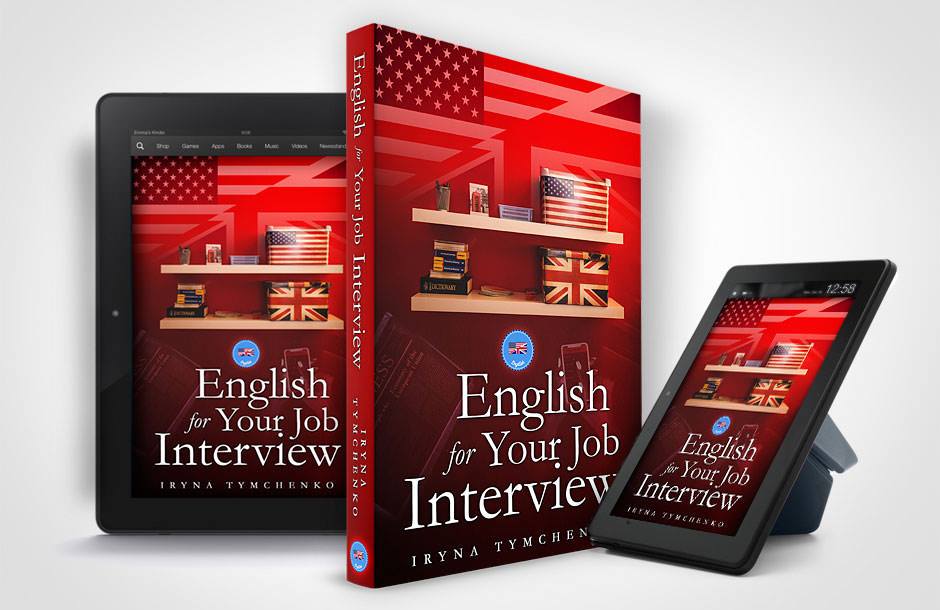
  • New: English for Your Job Interview

  • Follow me on Twitter

  • An Interview

  • Recent: Romantic English Phrasebook

  • Recent: Romantic Russian Phrase Book

  • Languages & Lifestyles

  • Archives

  • Goodreads

  • 101 Books

  • Writing

  • Blogs I Follow

Shelf Love

live mines and duds: the reading life